Ambassador Jack Matlock - Did the West Fumble the Post-Cold War Peace? | Ep 580, Aug 28, 2026 [EP580]
Posted on Friday, Aug 28, 2026 | Category: Armenia, US, Russia, Geopolitics, History, Soviet Armenia, USSR | Series: cog, video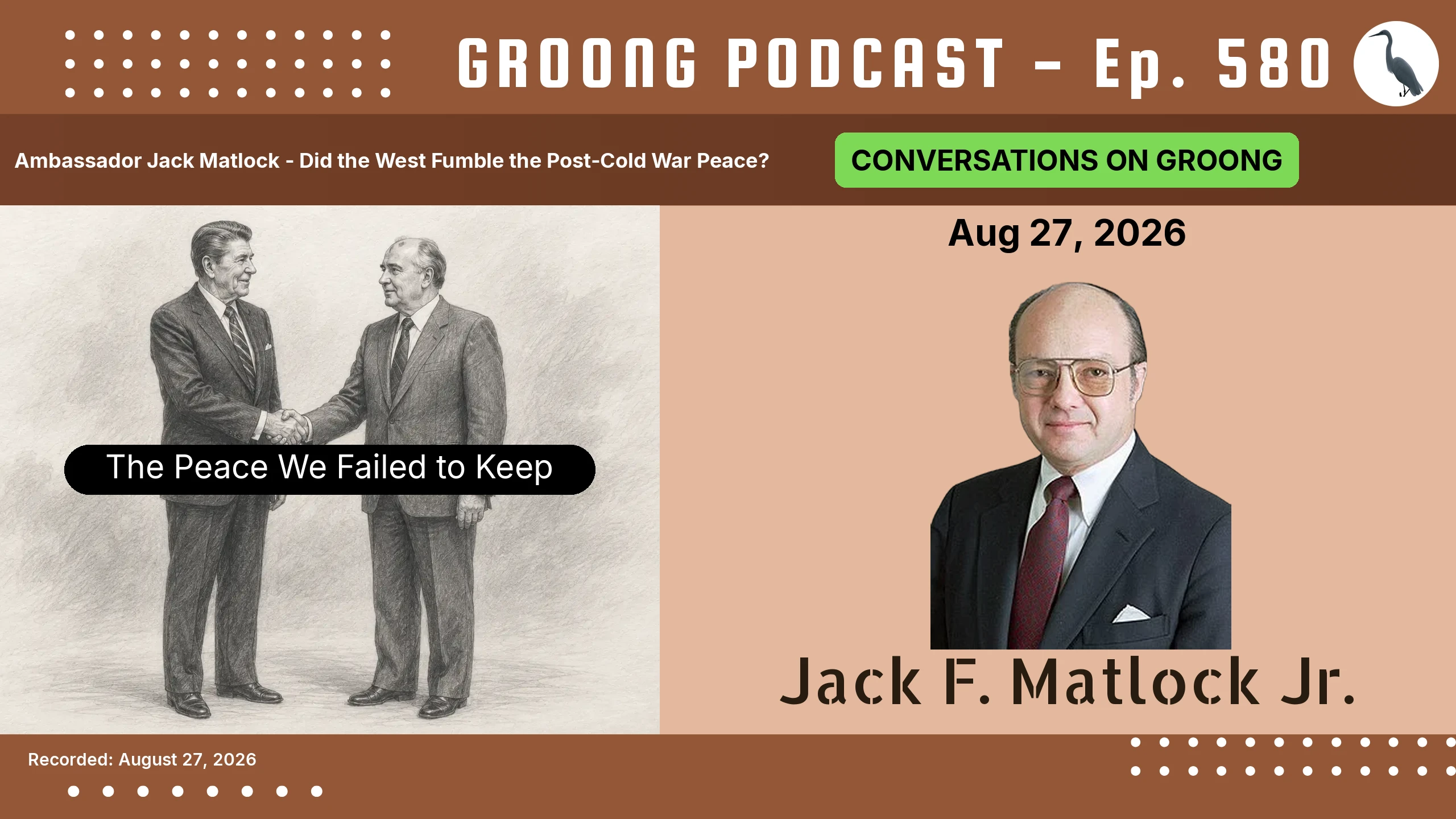
Groong Links:
Guest(s):
Topics:
- Recollections from Soviet South Caucasus
- Why the Soviet Union collapsed
- How the Cold War ended
- Reagan and Gorbachev’s diplomacy
- America’s post-Cold War triumphalism
- NATO expansion and Russian backlash
- Great-power rivalry in the Caucasus
- Armenia’s geopolitical choices today
Episode 580 | Recorded: Aug 27, 2026
#JackMatlock #ColdWar #SovietUnion #Reagan #Gorbachev #NATO #Russia #SouthCaucasus #Armenia
Show Notes
Summary
In this episode of Conversations on Groong, we speak with Ambassador Jack Matlock, the last US Ambassador to the Soviet Union, about whether the West missed a historic opportunity to integrate Russia into Western security architecture after the Cold War. We discuss the internal collapse of the Soviet Union, Reagan-Gorbachev diplomacy, NATO expansion and Russian backlash, and how Cold War-era decisions shape Armenia’s geopolitical choices today, including Matlock’s firsthand observations of Soviet Armenia during glasnost and the Nagorno Karabakh movement.Main Topics Addressed
- Matlock’s memories of Soviet Armenia
- Stalin’s statue removed in Yerevan
- Nagorno-Karabakh in the late Soviet period
- Why the Soviet Union collapsed
- Gorbachev and the decline of Communist rule
- Boris Yeltsin’s role in Soviet dissolution
- Reagan-Gorbachev diplomacy
- How the Cold War actually ended
- George H. W. Bush and Soviet preservation
- NATO expansion after the Cold War
- The “not one inch eastward” discussions
- German reunification and the Two Plus Four process
- Russia’s objections to NATO enlargement
- Ukraine, Georgia, and the 2008 NATO declaration
- Kosovo, Iraq, Libya, and Western military intervention
- Russia-West geopolitical rivalry
- RAND’s Extending Russia report
- Russia and the South Caucasus
- Armenia’s relations with Russia and Iran
- Armenia’s geopolitical pivot toward the West
- Diplomatic training and area studies
- Advice for Armenia’s foreign policy
Key Questions Discussed
- What did Ambassador Matlock observe during his visits to Soviet Armenia?
- What was happening in Armenia and Azerbaijan as the Nagorno-Karabakh conflict emerged?
- Why did Russia itself eventually turn against preserving the Soviet Union?
- Did Western military and economic pressure cause the USSR to collapse?
- Was the breakup of the Soviet Union inevitable once Gorbachev weakened central control?
- Why does Matlock distinguish the Soviet collapse from the end of the Cold War?
- What roles did Ronald Reagan and Mikhail Gorbachev play in ending the Cold War?
- Did the United States want the Soviet Union to break apart?
- What did George H. W. Bush hope would replace the old Soviet system?
- What did James Baker mean when he discussed NATO moving “not one inch” eastward?
- Was there a viable alternative to NATO expansion?
- Why did Matlock oppose NATO enlargement?
- How did Russia initially respond to NATO expansion into Eastern Europe and the Baltic states?
- Why did NATO membership for Ukraine and Georgia become particularly sensitive?
- How did Western interventions in Serbia, Iraq, and Libya affect relations with Russia?
- Has the West come to view Russia as part of a broader civilizational conflict?
- How did Russia-West competition affect the South Caucasus?
- What lessons should Armenia draw from the experiences of other states caught between larger powers?
- Should Armenia reduce its relations with Russia as it moves closer to the West?
- How important are regional expertise and language training for effective diplomacy?
- What advice does Matlock have for Armenia’s leaders today?
Referenced Articles & Sources
Jack Matlock’s 2017 Remarks in Yerevan
Matlock’s remarks on Russian and regional interests in the South Caucasus and the Nagorno-Karabakh conflict:
https://www.youtube.com/watch?v=lzBaxX6Xnsg&t=1778s
RAND Corporation: Extending Russia: Competing from Advantageous Ground
The 2019 U.S. Army-sponsored RAND study examined possible ways of imposing costs on Russia. One section considered measures under the heading “Exploit Tensions in the South Caucasus,” including efforts to weaken Armenia’s relationship with Russia.
https://www.rand.org/content/dam/rand/pubs/research_reports/RR3000/RR3063/RAND_RR3063.pdf
Books Authored by Jack F. Matlock
- Autopsy on an Empire: The American Ambassador’s Account of the Collapse of the Soviet Union (1995)
- Reagan and Gorbachev: How the Cold War Ended (2004)
- Superpower Illusions: How Myths and False Ideologies Led America Astray – And How to Return to Reality (2010)
Wrap-up
Links and Resources
That’s our show , we hope you found it helpful. We invite your feedback and your suggestions, you can find us on most social media and podcast platforms.
Thanks to Laura Osborn for the music on our podcasts.
Guests
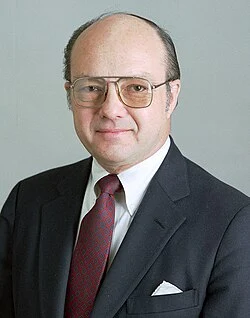
Jack F. Matlock
Jack F. Matlock Jr. is a retired U.S. career diplomat and scholar specializing in Soviet and Russian affairs. Born in Greensboro, North Carolina in 1929, Matlock earned his B.A. summa cum laude from Duke University in 1950 and an M.A. from Columbia University in 1952, where he studied Russian language and area studies. His interest in Russia was sparked by reading Dostoyevsky as an undergraduate at Duke.
Before his diplomatic career, Matlock taught Russian language and literature at Dartmouth College from 1953 to 1956. He then served 35 years in the U.S. Foreign Service from 1956 to 1991, holding key positions including Vice Consul in Moscow, Director of Soviet Affairs in Washington, Ambassador to Czechoslovakia, and most notably, Ambassador to the Soviet Union from 1987 to 1991, where he witnessed the final years of the Cold War and attended nearly all major U.S.-Soviet summits between 1972 and 1991. Throughout his career, he held positions in Ghana, Zanzibar, and Tanzania, while also serving as a specialist on Soviet affairs at the National Security Council.
After his retirement from the Foreign Service, Matlock became a respected historian and author, writing influential works including Autopsy on an Empire (1995) and Reagan and Gorbachev: How the Cold War Ended (2004). He has taught diplomacy and international relations at Columbia University, Princeton University, Duke University, and Hamilton College, and held the George F. Kennan Professorship at Princeton’s Institute for Advanced Study from 1996 to 2001. In recognition of his scholarly contributions, Matlock was elected to the American Philosophical Society in 1998 and earned his Ph.D. from Columbia University in 2013 at age 83. He is fluent in Czech, French, German, Russian, and Swahili.
Hosts
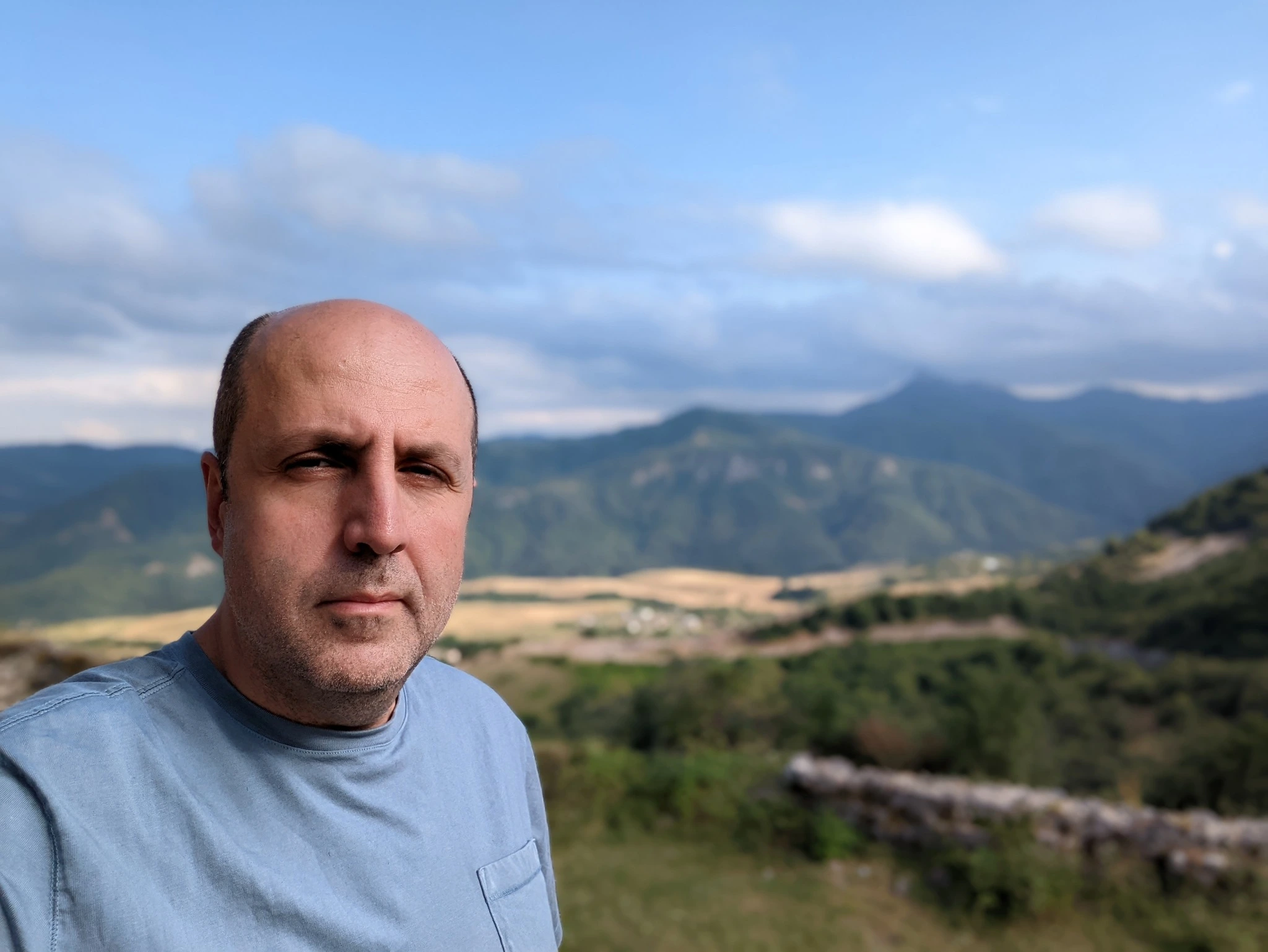
Hovik Manucharyan
Hovik Manucharyan is an information security engineer who moved from Seattle to Armenia in 2022. He co-founded the ANN/Groong podcast in 2020 and has been a contributor to Groong News since the late 1990s.
Disclaimer: The views expressed by Hovik Manucharyan on the ANN/Groong podcast are his own and do not necessarily reflect the opinions of his employer or any other organization.

Asbed Bedrossian
Asbed Bedrossian is an IT professional, and for years oversaw the central IT enterprise infrastructure and services at USC. His decades of experience spanned across IT strategy, enterprise architecture, infrastructure, cybersecurity, enterprise applications, data center operations, high performance computing, ITSM, ITPM, and more.
Asbed founded the Armenian News Network Groong circa 1989/1990, and co-founded the ANN/Groong podcast in 2020.
Related Episodes
Clips from this episode
 Why the Soviet Union Collapsed from Within, Not by Western Pressure
 Secretary Baker's 'Not One Inch' Promise: NATO Expansion and the Two Plus Four Treaty
 Matlock Witnessed Stalin's Statue Fall in Yerevan
 The West Used Double Standards: Iraq, Libya, and Russia's Response
 Reagan Never Insulted Soviet Leaders, Unlike Modern Diplomacy
 Armenia Must Avoid Zero-Sum Geopolitics and Preserve Regional Relations