Groong Links:
Topics:
- Disputed mandate, unresolved majority
- Election-day irregularities in plain sight
- ODIHR’s mixed preliminary verdict
- Bribery replaced by state spending
- Opposition’s next steps uncertain
Episode 556 | Recorded: Jun 9, 2026 #ArmenianElections #ArmenianNews #CivilContract #Pashinyan #Election2026 #SouthCaucasus
Show Notes
Summary
In this episode of Groong Week in Review, we analyze the disputed results of Armenia’s June 7, 2026 Armenian Parliamentary Election. We examine Civil Contract’s contested majority, alleged irregularities and invalid ballots, the OSCE/ODIHR preliminary report, the last-minute exclusion of Prosperous Armenia, opposition arrests and pressure, and what a three-fifths majority could mean for Armenia’s courts, institutions, and foreign policy.Main Topics Addressed
- Armenia’s June 7, 2026 parliamentary election results
- Civil Contract ’s claimed victory and disputed mandate
- Prosperous Armenia’s 4% threshold dispute
- Alleged election-day falsifications and irregularities
- Sharp rise in invalid ballots
- Secret voter list discrepancies
- Late-night voting reports involving soldiers
- Pashinyan ’s early victory announcement
- OSCE/ODIHR preliminary assessment
- The political meaning of a three-fifths majority
- State spending as a form of pre-election bribery
- Foreign reactions from Europe, Russia, Turkey, and Azerbaijan
- The opposition’s next steps after the vote
Key Questions Discussed
- What went wrong for the opposition, despite high turnout?
- Did Pashinyan get the mandate he wanted?
- Will Prosperous Armenia enter parliament after recounts?
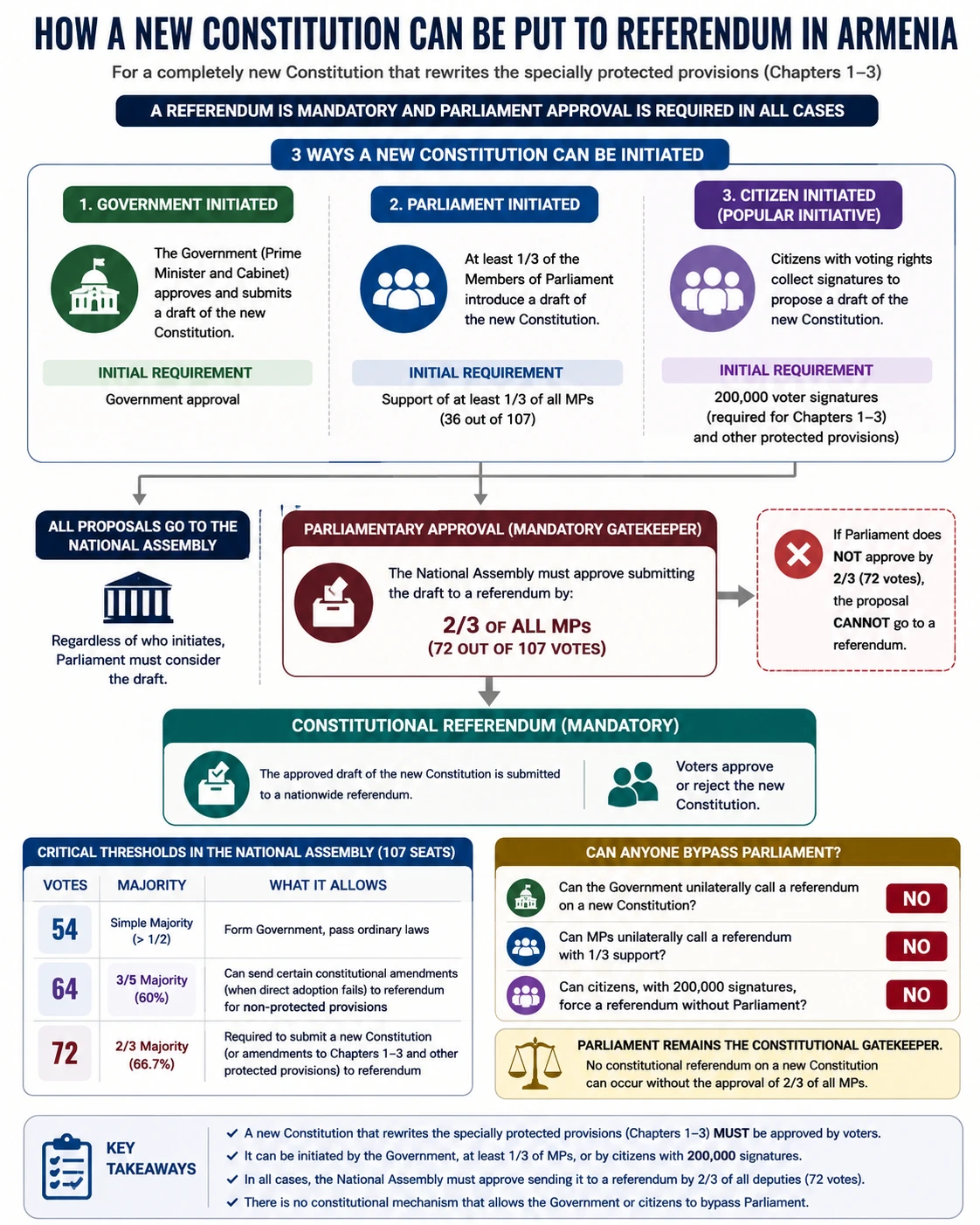
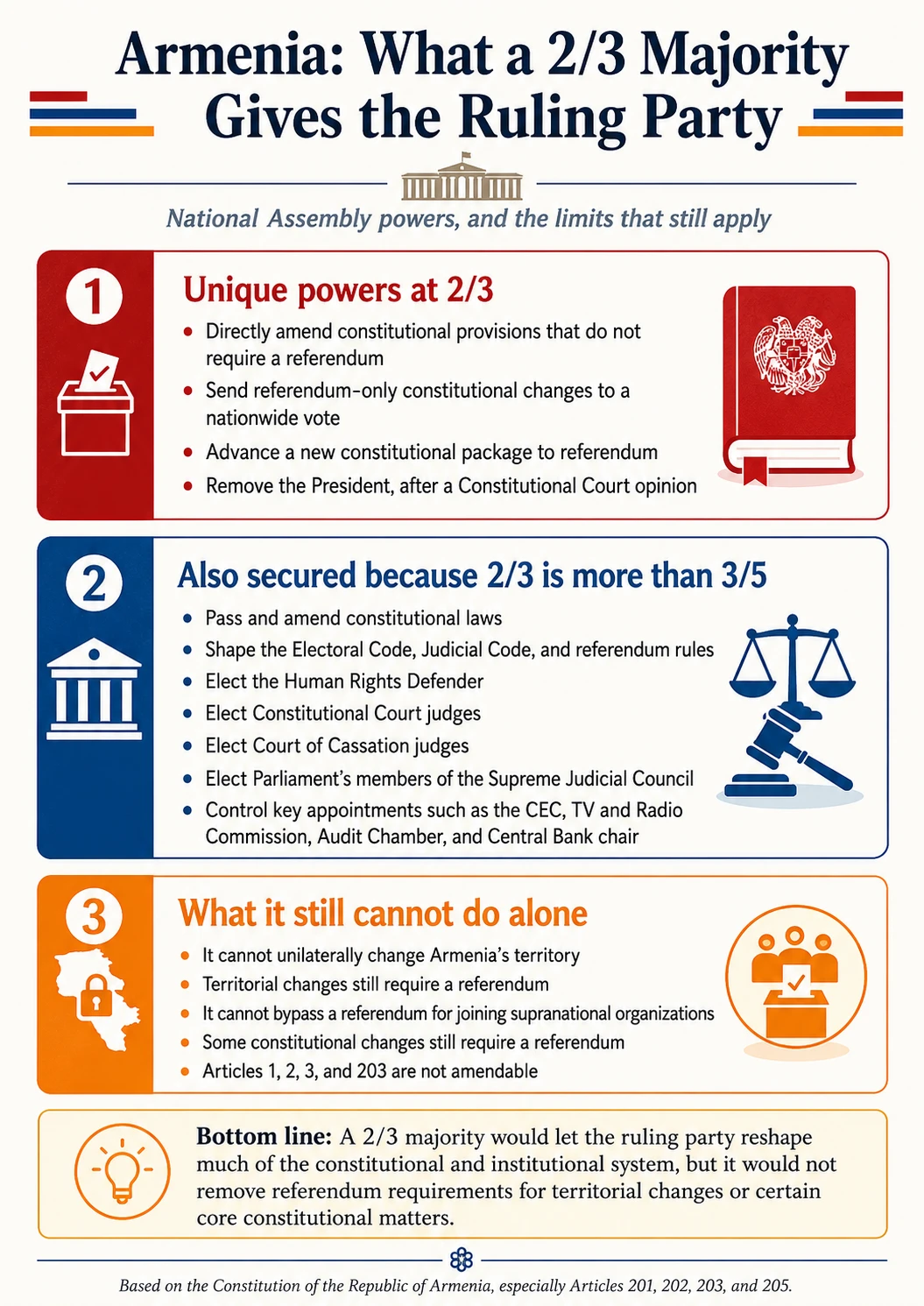
- What would a Civil Contract three-fifths majority allow it to do?
- Can Civil Contract control judicial and institutional appointments on its own?
- Were the elections free and fair, or only technically well run?
- Why did invalid ballots rise so sharply compared with 2021 and 2017?
- What explains the gap between the public voter registry and the CEC’s electorate figure?
- Why was Pashinyan able to declare victory so early?
- How should the opposition challenge the results?
- Should the opposition take its seats in parliament, or boycott?
- Can public distrust in the election become a basis for further political action?
Infographics
Referenced Articles & Sources
Panorama: Prosperous Armenia vote threshold dispute https://www.panorama.am/am/news/2026/06/08/%D4%B1-%D5%80%D5%B8%D5%BE%D5%B0%D5%A1%D5%B6%D5%B6%D5%AB%D5%BD%D5%B5%D5%A1%D5%B6/3161217
168.am: CEC voter registry discrepancy https://168.am/2026/06/08/2427660.html
News.am: Reporter questioned after filming soldiers voting late https://news.am/hy/news/1042286
OSCE/ODIHR Preliminary Statement, Armenia Parliamentary Elections 2026 https://odihr.osce.org/sites/default/files/documents/official_documents/2026/06/ARM%20Parliamentary%202026_PS_08.06.2026.pdf
YouTube: Discussion on alleged state spending before the election https://www.youtube.com/watch?v=PpDfiLcEYvM
Azatutyun: Pashinyan victory statement based on partial vote count https://www.azatutyun.am/a/33775003.html
Russian Foreign Ministry statement, Maria Zakharova https://mid.ru/en/foreign_policy/news/2115743/
Edmon Marukyan Facebook address https://www.facebook.com/reel/1367543515435435
Sputnik Armenia: Marukyan warning on vulnerable opposition MPs https://am.sputniknews.ru/20260608/u-pashinyana-est-kompromat-na-oppozitsionerov-marukyan-predupredil-o-posledstviyakh-103248850.html
Tofiq Zulfugarov reaction https://www.facebook.com/tofig.zulfugarov/posts/pfbid0qg6fdNE1gWc2e7reEG4ECbiervJjHDzZbkBKzjUZG8UyJh3eDys1eHAMM5Ng8Gmml
Turkish Foreign Ministry statement on Armenia’s elections https://www.mfa.gov.tr/no_-111_-ermenistan-da-duzenlenen-parlamento-secimleri-hk.en.mfa
Links and Resources
That’s our show , we hope you found it helpful. We invite your feedback and your suggestions, you can find us on most social media and podcast platforms.
Thanks to Laura Osborn for the music on our podcasts.
Hosts

Hovik Manucharyan
Hovik Manucharyan is an information security engineer who moved from Seattle to Armenia in 2022. He co-founded the ANN/Groong podcast in 2020 and has been a contributor to Groong News since the late 1990s.
Disclaimer: The views expressed by Hovik Manucharyan on the ANN/Groong podcast are his own and do not necessarily reflect the opinions of his employer or any other organization.

Asbed Bedrossian
Asbed Bedrossian is an IT professional, and for years oversaw the central IT enterprise infrastructure and services at USC. His decades of experience spanned across IT strategy, enterprise architecture, infrastructure, cybersecurity, enterprise applications, data center operations, high performance computing, ITSM, ITPM, and more.
Asbed founded the Armenian News Network Groong circa 1989/1990, and co-founded the ANN/Groong podcast in 2020.