China
Last updated: June 11, 2026
China is the world’s second-largest economy with a population of approximately 1.4 billion people and the largest manufacturing base globally. The People’s Republic of China (PRC), governed as a one-party socialist state under the Chinese Communist Party, has emerged as a superpower through rapid economic growth, technological advancement, and strategic infrastructure development. China’s Belt and Road Initiative (BRI), launched in 2013, represents a comprehensive strategy to expand economic ties and geopolitical influence across Asia, Africa, Europe, and increasingly the South Caucasus through infrastructure investment, trade partnerships, and financial mechanisms like the Asian Infrastructure Investment Bank (AIIB).
China’s rise as a global power shapes the geopolitical environment in which Armenia operates, particularly through its strategic partnership with Russia and its competition with the United States for influence across Eurasia. Beijing has deepened ties with Moscow in response to Western sanctions and isolation, creating a de facto alignment that affects regional dynamics from Ukraine to the South Caucasus. China’s Belt and Road Initiative and its broader vision of a multipolar world order challenge the U.S.-led international system, creating openings and constraints for smaller states navigating between competing great powers.
China’s Economic Strategy in the South Caucasus
China views the South Caucasus as a critical bridge connecting Central Asia to Europe and bypassing trans-Siberian routes. The Belt and Road Initiative focuses on developing reliable trans-Caspian trade routes, securing energy resources, capturing electric vehicle markets, and establishing logistical footholds in Black Sea ports. In Georgia, Chinese consortia are reviving the stalled Anaklia Deep-Sea Port project to create a major container hub, leveraging Georgia’s tariff-free trade agreement with China. In Azerbaijan, bilateral trade reached approximately $3.74 billion, with Chinese state-owned enterprises investing heavily in petrochemicals, metallurgy, and renewable energy. Azerbaijan has also emerged as a massive market for Chinese EV exports, importing nearly 15,500 hybrid and electric vehicles in a recent year. China has aligned the BRI with Azerbaijan’s domestic “Silk Road Revival” to maximize trans-Caspian multimodal freight integration.
China-Armenia Relations
China’s economic engagement with Armenia remains underdeveloped compared to its partnerships with Azerbaijan and Georgia. Beijing is exploring highway development via the North-South Transport Corridor to better link Armenia to regional trade networks. The Asian Infrastructure Investment Bank (AIIB) and Silk Road Fund serve as primary mechanisms for Chinese financing of regional road, rail, and telecommunication upgrades, though Armenian participation lags behind other Caucasus states. China’s technological and innovation cooperation includes digitalization and “Smart Science City” development initiatives, but Armenia has not been prioritized as a hub for these programs. The limited bilateral economic engagement reflects both Armenia’s smaller market size and its historical alignment with Russia, which constrains Chinese investment even as Beijing seeks to expand its economic footprint across the region.
For Armenia, China’s trajectory matters less as a direct economic partner than as a force reshaping the larger contest between Russia and the West—and increasingly, between itself and the West—within which Armenia’s own survival depends.
The Iran War beginning in early 2026 brought China into sharper focus as a factor in Armenian security. Dr. Anatol Lieven and Sergei Melkonian both examined how the war affects energy supplies, de-dollarization, and alternative financial architectures that bypass American control, with China positioned as a potential beneficiary of reduced U.S. dominance in global markets. Prof. Warwick Powell discussed in depth how the war on Iran relates to U.S. energy efficiency, the limits of American airpower, and the rise of alternative payment systems and information networks in which China plays a central role. These conversations illustrated that Armenia’s position in a multipolar order depends partly on whether China and Russia can sustain their partnership, and whether the U.S. can maintain its leverage over regional states despite mounting challenges to its global position.
TRIPP (Trump Route for International Peace and Prosperity), the U.S.-backed transit corridor through Armenian Syunik province, is explicitly framed by Washington as a tool to limit Chinese and Russian influence in Central Asia and the Middle East. Multiple episodes have noted that the corridor serves American strategic interests in accessing critical minerals and building logistics networks independent of both Iran and Russia, with secondary implications for containing Chinese Belt and Road expansion in the region. China’s own interests in Eurasian connectivity remain underdeveloped in Armenia-specific analysis, but the competing visions of regional integration between TRIPP and Russian-Chinese alternatives represent a structural choice Armenia cannot avoid indefinitely. Whether Armenia emerges from its current isolation as a node in a U.S., Russian, Chinese, or genuinely multipolar network will depend on outcomes beyond Armenian control, making Armenia’s role in the broader U.S.-China-Russia competition far more consequential than any direct Sino-Armenian relationship.
Groong episodes that include this tag
Below are all Groong episodes tagged with China.
China Is an Enabling Power, Not an Extractive One [EP587]
Posted on Sunday, Sep 20, 2026 | Category: Geopolitics, China, EconomyWarwick Powell defines China as an enabling power that funds infrastructure, training, and open source models with very few strings, not an extractive hegemon.
Energy Is the Real Bottleneck for AI [EP587]
Posted on Sunday, Sep 20, 2026 | Category: Technology, EconomyWarwick Powell argues energy, not chips, is the foundational bottleneck for AI, warning that hyperscale data centers are creating an electricity have and have-not divide.
How Beijing Really Sees TRIPP and the Middle Corridor [EP587]
Posted on Sunday, Sep 20, 2026 | Category: Geopolitics, China, ArmeniaWarwick Powell on why Beijing stays relaxed about TRIPP and the Middle Corridor, and how the risk of any route becoming a chokepoint is managed by keeping alternatives.
The Poison Pills in U.S. Tech Deals With Small States [EP587]
Posted on Sunday, Sep 20, 2026 | Category: Technology, Politics, USAWarwick Powell on the poison pill clauses in U.S. tech deals that lock smaller states into a single ecosystem, using Malaysia as a case with lessons for Armenia.
Why the American AI Business Model Collapsed [EP587]
Posted on Sunday, Sep 20, 2026 | Category: Technology, China, GeopoliticsWarwick Powell explains how DeepSeek’s open source model broke the proprietary American AI moat and why safety talk now doubles as commercial cover.
Suren Sargsyan - Central Asia, TRIPP, Iran, and Armenia in the New Great Game | Ep 583, Sep 5, 2026 [EP583]
Posted on Saturday, Sep 5, 2026 | Category: Armenia, Geopolitics | Series: cog, video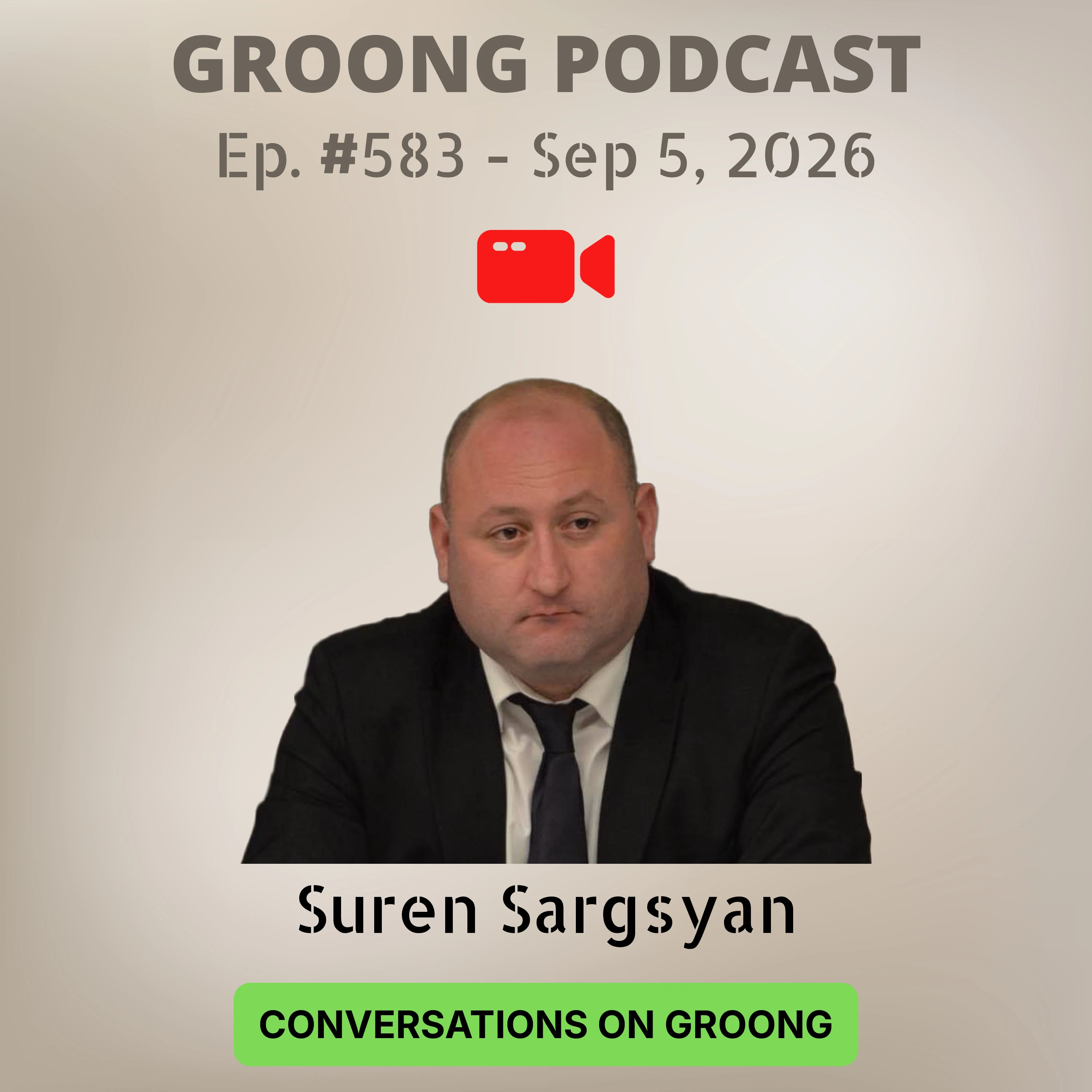
Groong Links:
Guest(s):
Topics:
- U.S. objectives in the Iran war
- Russia’s 102nd base in Armenia
- Pashinyan’s sovereignty policy contradictions
- Great-power rivalry across Central Asia
- U.S. and EU interests in TRIPP
- Armenia’s place in Eurasian competition
Episode 583 | Recorded: Sep 4, 2026
#Armenia #IranWar #TRIPP #CentralAsia #Russia #UnitedStates #Geopolitics #SouthCaucasus
Suren Sargsyan - Central Asia, TRIPP, Iran, and Armenia in the New Great Game | Ep 583, Sep 5, 2026 [EP583]
Posted on Saturday, Sep 5, 2026 | Category: Armenia, GeopoliticsGroong Links:
Guest(s):
Topics:
- U.S. objectives in the Iran war
- Russia’s 102nd base in Armenia
- Pashinyan’s sovereignty policy contradictions
- Great-power rivalry across Central Asia
- U.S. and EU interests in TRIPP
- Armenia’s place in Eurasian competition
Episode 583 | Recorded: Sep 4, 2026
#Armenia #IranWar #TRIPP #CentralAsia #Russia #UnitedStates #Geopolitics #SouthCaucasus
Transcript: Suren Sargsyan - Central Asia, TRIPP, Iran, and Armenia in the New Great Game | Ep 583, Sep 5, 2026 [EP583]
Posted on Saturday, Sep 5, 2026 | Category: Armenia, Geopolitics, TranscriptIn this episode of Conversations on Groong, we speak with Suren Sargsyan about the Iran War and great power competition for Armenia’s strategic position. We discuss Washington’s unclear endgame in the conflict with Iran, the future of Russia’s military presence in Armenia and CSTO membership, and competing U.S. and European interests in new east-west transit routes through Armenia and Central Asia amid broader geopolitical rivalries.
TRIPP, Kazakhstan, and the Western Encroachment in Central Asia [EP581]
Posted on Saturday, Aug 29, 2026 | Category: Geopolitics, PoliticsPashinyan offers TRIPP stakes to Kazakhstan and Kyrgyzstan to isolate Russia while EU seeks Central Asian access. Expert analyzes broader European strategy in Central Asia and China’s role.
Richard Campbell - The AI Infrastructure Race and Armenia’s High-Stakes Bet | Ep 577, Aug 16, 2026 [EP577]
Posted on Sunday, Aug 16, 2026 | Category: Armenia, Geopolitics, Technology | Series: cog, video
Groong Links:
Guest(s):
Topics:
- Global AI race and hype
- Economics of AI data centers
- Energy limits and infrastructure demands
- Armenia’s Firebird AI project
- Jobs, innovation, and local benefits
- AI sovereignty and export controls
- Military value and security risks
Episode 577 | Recorded: August 11, 2026
#ArtificialIntelligence #Armenia #FirebirdAI #AIDataCenters #SovereignAI #EnergySecurity #TechGeopolitics #NationalSecurity
Richard Campbell - The AI Infrastructure Race and Armenia’s High-Stakes Bet | Ep 577, Aug 16, 2026 [EP577]
Posted on Sunday, Aug 16, 2026 | Category: Armenia, Geopolitics, TechnologyGroong Links:
Guest(s):
Topics:
- Global AI race and hype
- Economics of AI data centers
- Energy limits and infrastructure demands
- Armenia’s Firebird AI project
- Jobs, innovation, and local benefits
- AI sovereignty and export controls
- Military value and security risks
Episode 577 | Recorded: August 11, 2026
#ArtificialIntelligence #Armenia #FirebirdAI #AIDataCenters #SovereignAI #EnergySecurity #TechGeopolitics #NationalSecurity
Transcript: Richard Campbell - The AI Infrastructure Race and Armenia’s High-Stakes Bet | Ep 577, Aug 16, 2026 [EP577]
Posted on Sunday, Aug 16, 2026 | Category: Armenia, Geopolitics, Technology, TranscriptIn this episode of Conversations on Groong, we speak with Richard Campbell about artificial intelligence infrastructure and Armenia’s Firebird project. We discuss the global AI race, the economics and energy demands of data centers, whether current AI valuations align with physical and economic realities, and what sovereign AI capacity means for Armenia’s strategic positioning.
Groong Links:
Guest(s):
Topics:
- Ukraine’s long war and endgame
- Novorossiya and a landlocked Ukraine?
- Europe rearms against Russia
- NATO 3.0 and containment
- Armenia’s post-election Western pivot
- EU promises versus EAEU dependence
- TRIPP, Syunik, and Russian red lines
Episode 566 | Recorded: July 9, 2026
#Russia #UkraineWar #NATO #Europe #Armenia #SouthCaucasus #TRIPP #Syunik #EAEU
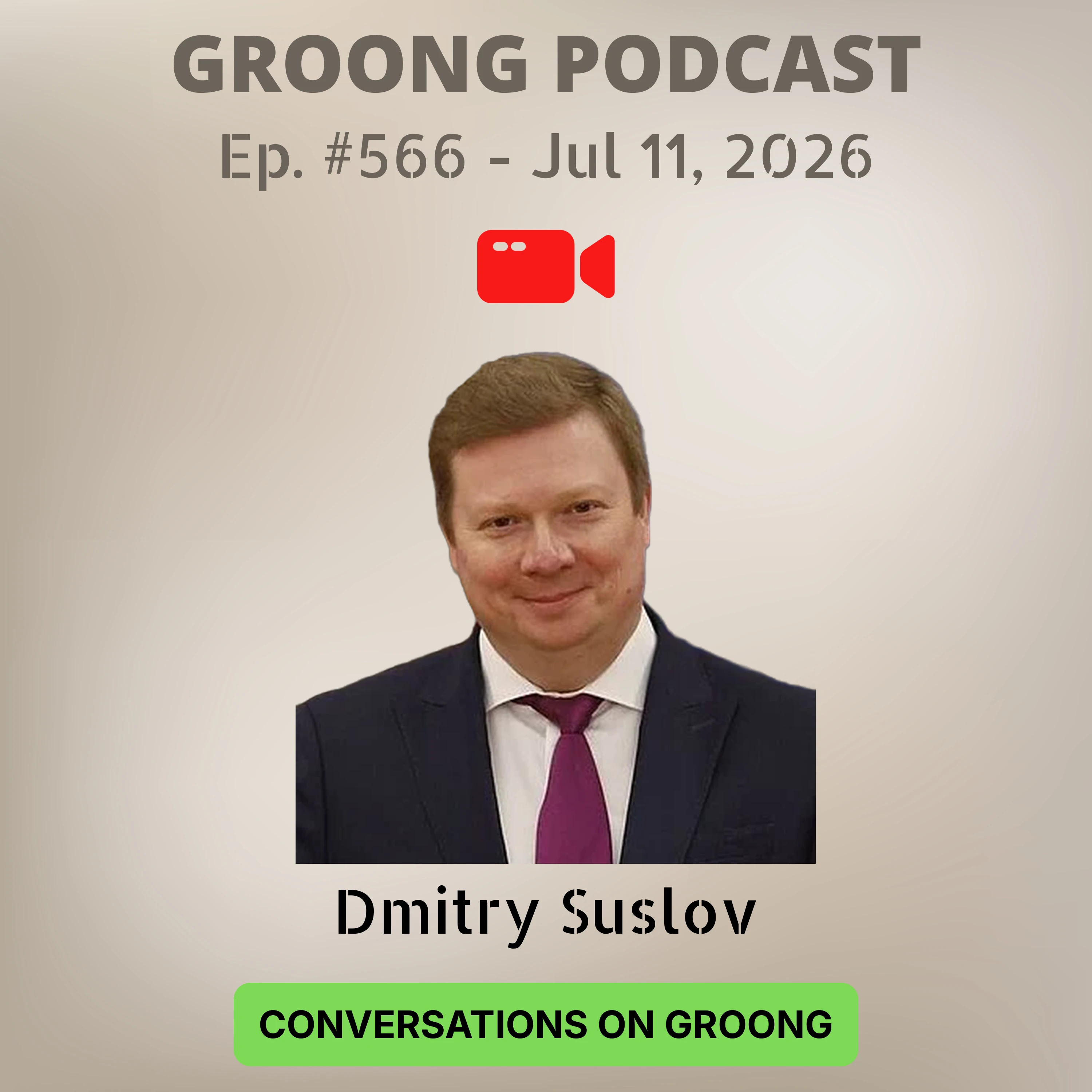
Dmitry Suslov - Ukraine’s Endgame, Armenia’s Crossroads | Ep 566, Jul 11, 2026 [EP566]
Posted on Saturday, Jul 11, 2026 | Category: Armenia, Russia, Ukraine, PoliticsGroong Links:
Guest(s):
Topics:
- Ukraine’s long war and endgame
- Novorossiya and a landlocked Ukraine?
- Europe rearms against Russia
- NATO 3.0 and containment
- Armenia’s post-election Western pivot
- EU promises versus EAEU dependence
- TRIPP, Syunik, and Russian red lines
Episode 566 | Recorded: July 9, 2026
#Russia #UkraineWar #NATO #Europe #Armenia #SouthCaucasus #TRIPP #Syunik #EAEU
Transcript: Dmitry Suslov - Ukraine’s Endgame, Armenia’s Crossroads | Ep 566, Jul 11, 2026 [EP566]
Posted on Saturday, Jul 11, 2026 | Category: Armenia, Russia, Ukraine, Politics, TranscriptIn this episode of Conversations on Groong, we speak with Dr. Dmitry Suslov about Russia’s strategic position across multiple fronts: the Ukraine War, Armenia’s post-election Western pivot, TRIPP and Syunik, and Europe’s rearmament against Russia. We discuss the long-term confrontation between Russia and NATO, Pashinyan’s Western alignment after the June 2026 Armenian Parliamentary Election, and how transport corridors in the South Caucasus may reshape regional containment lines.
Rubio Visit, New MPG and IRI Polls, Hidden Votes and Why Are You Alive? | Ep 550, May 24, 2026 [EP550]
Posted on Wednesday, May 27, 2026 | Category: Armenia, Politics, Poll, Armenian Church, Nagorno Karabakh, Armenian Genocide, Azerbaijan, Russia, China | Series: wir, video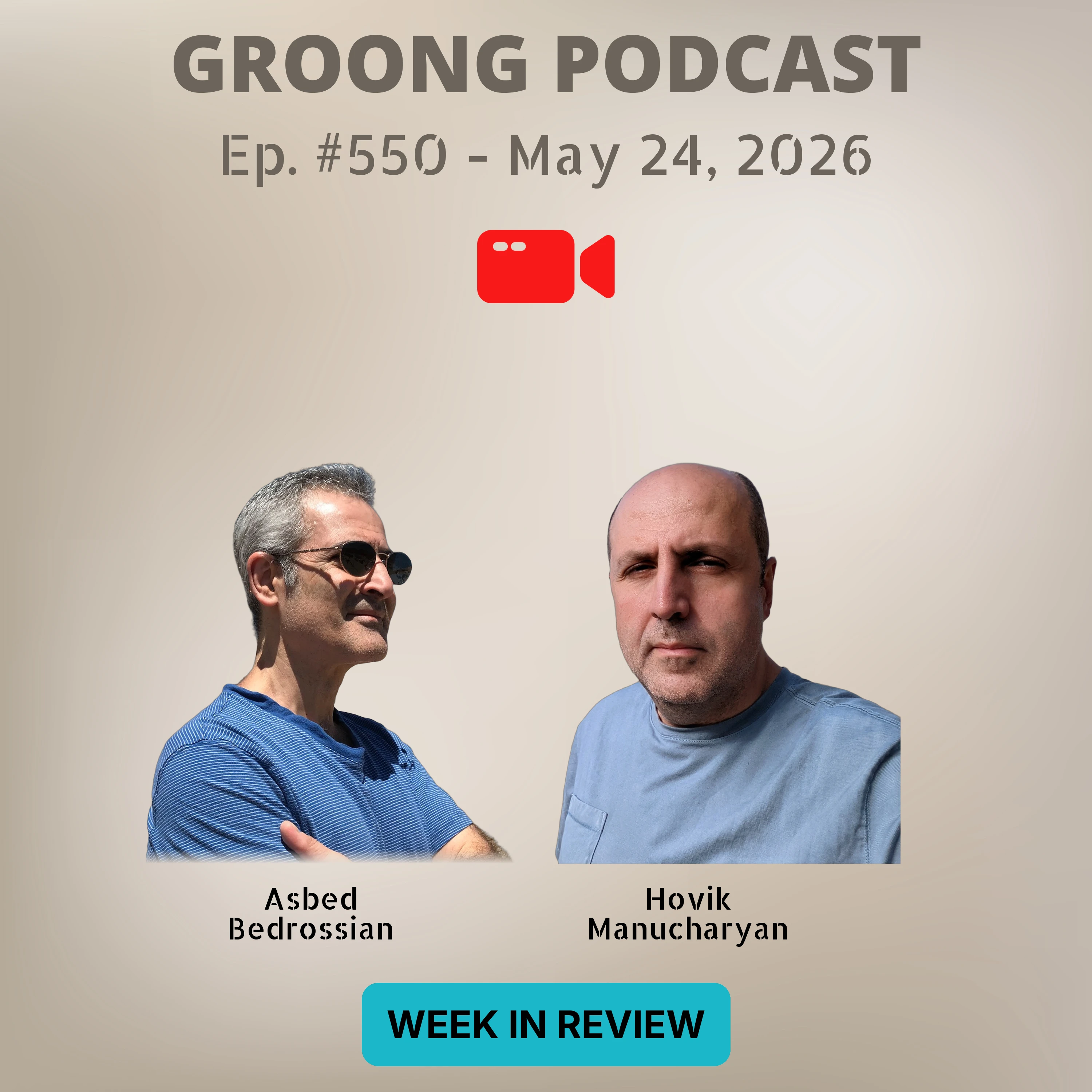
Groong Links:
Topics:
- Rubio’s sudden Armenia visit
- Polls diverge before election
- Hidden vote raises questions
- TRIPP remains deeply polarizing
- “Western Azerbaijan” pressure grows
- Opposition faces arrests, threats
- “Why are you alive?” campaign rhetoric
Episode 550 | Recorded: May 25, 2026
#ArmeniaElections #Armenia #NikolPashinyan #TRIPP #ZangezurCorridor #WesternAzerbaijan #ArmenianOpposition
Rubio Visit, New MPG and IRI Polls, Hidden Votes and Why Are You Alive? | Ep 550, May 24, 2026 [EP550]
Posted on Wednesday, May 27, 2026 | Category: Armenia, Politics, Poll, Armenian Church, Nagorno Karabakh, Armenian Genocide, Azerbaijan, Russia, ChinaGroong Links:
Topics:
- Rubio’s sudden Armenia visit
- Polls diverge before election
- Hidden vote raises questions
- TRIPP remains deeply polarizing
- “Western Azerbaijan” pressure grows
- Opposition faces arrests, threats
- “Why are you alive?” campaign rhetoric
Episode 550 | Recorded: May 25, 2026
#ArmeniaElections #Armenia #NikolPashinyan #TRIPP #ZangezurCorridor #WesternAzerbaijan #ArmenianOpposition
Transcript: Rubio Visit, New MPG and IRI Polls, Hidden Votes and Why Are You Alive? | Ep 550, May 24, 2026 [EP550]
Posted on Wednesday, May 27, 2026 | Category: Armenia, Politics, Poll, Armenian Church, Nagorno Karabakh, Armenian Genocide, Azerbaijan, Russia, China, TranscriptThis Week in Review examines the tightening political climate in Armenia ahead of the June 2026 parliamentary elections. Asbed and Hovik discuss Marco Rubio’s sudden Armenia visit, new polling from IRI, MPG, and CAEAC, and what the wide gaps in voter disclosure may reveal about hidden opposition support. The episode also covers TRIPP, “Western Azerbaijan” rhetoric, public trust in the Armenian Apostolic Church, and the growing use of arrests, threats, and state pressure against opposition figures. The discussion centers on Pashinyan’s escalating campaign rhetoric, including his “Why are you alive?” outburst, and what it signals about the stakes of the coming election.
Pashinyan's Hate Speech, Threats, and the June 7 Election Climate | Ep 547, May 17, 2026 [EP547]
Posted on Tuesday, May 19, 2026 | Category: Armenia, Politics, Election, Armenian Church, Nagorno Karabakh, Artsakh Blockade, Russia, China, Azerbaijan, Georgia, Iran, NATO | Series: wir, video
Groong Links:
Topics:
- Trump, China, and Iran
- Armenia-Russia “soft divorce”
- Pashinyan’s violent campaign rhetoric
- State resources and election pressure
- Javakhk church vandalism concerns
Episode 547 | Recorded: May 18, 2026
#Pashinyan #ArmeniaElections #ArmenianPolitics #PoliticalViolence #HateSpeech #ArmeniaRussia #IranWar #SouthCaucasus
Pashinyan's Hate Speech, Threats, and the June 7 Election Climate | Ep 547, May 17, 2026 [EP547]
Posted on Tuesday, May 19, 2026 | Category: Armenia, Politics, Election, Armenian Church, Nagorno Karabakh, Artsakh Blockade, Russia, China, Azerbaijan, Georgia, Iran, NATOGroong Links:
Topics:
- Trump, China, and Iran
- Armenia-Russia “soft divorce”
- Pashinyan’s violent campaign rhetoric
- State resources and election pressure
- Javakhk church vandalism concerns
Episode 547 | Recorded: May 18, 2026
#Pashinyan #ArmeniaElections #ArmenianPolitics #PoliticalViolence #HateSpeech #ArmeniaRussia #IranWar #SouthCaucasus
Transcript: Pashinyan's Hate Speech, Threats, and the June 7 Election Climate | Ep 547, May 17, 2026 [EP547]
Posted on Tuesday, May 19, 2026 | Category: Armenia, Politics, Election, Armenian Church, Nagorno Karabakh, Artsakh Blockade, Russia, China, Azerbaijan, Georgia, Iran, NATO, TranscriptThis Week in Review covers a tense mix of global and Armenian political crises, from Trump’s summit with Xi Jinping and the deepening Iran war, to Armenia’s worsening relations with Russia and the risks to trade, energy, and security ties. Hovik and Asbed also examine Armenia’s heated election climate, including allegations of state pressure, abuse of administrative resources, selective law enforcement, Pashinyan’s violent campaign rhetoric against opposition leaders, and the muted response of international observers. The episode also looks at Robert Kocharyan’s call for major-power guarantees for peace with Azerbaijan, and the vandalism of the Sourp Nshan Armenian Church in Javakhk.
Anatol Lieven - Russia, Iran, Europe, and the Remaking of World Order | Ep 541, May 8, 2026 [EP541]
Posted on Friday, May 8, 2026 | Category: Armenia, Ukraine, Russia, European Union, Iran, Israel, China, Azerbaijan, Turkey | Series: cog
Groong Links:
Guest(s):
Topics:
- Russia, Iran, Europe, multipolar order
- Ukraine war and Russia-West tensions
- Iran war and diplomatic offramps
- Armenia, TRIPP, South Caucasus
Episode 541 | Recorded: May 5, 2026
#AnatolLieven #Russia #Iran #Europe #UkraineWar #SouthCaucasus
Anatol Lieven - Russia, Iran, Europe, and the Remaking of World Order | Ep 541, May 8, 2026 [EP541]
Posted on Friday, May 8, 2026 | Category: Armenia, Ukraine, Russia, European Union, Iran, Israel, China, Azerbaijan, TurkeyGroong Links:
Guest(s):
Topics:
- Russia, Iran, Europe, multipolar order
- Ukraine war and Russia-West tensions
- Iran war and diplomatic offramps
- Armenia, TRIPP, South Caucasus
Episode 541 | Recorded: May 5, 2026
#AnatolLieven #Russia #Iran #Europe #UkraineWar #SouthCaucasus
Transcript: Anatol Lieven - Russia, Iran, Europe, and the Remaking of World Order | Ep 541, May 8, 2026 [EP541]
Posted on Friday, May 8, 2026 | Category: Armenia, Ukraine, Russia, European Union, Iran, Israel, China, Azerbaijan, Turkey, TranscriptIn this episode of Conversations on Groong, Dr. Anatol Lieven joins us to examine Russia’s place in a rapidly shifting global order. The discussion looks at the war in Ukraine, the state of Russia-EU relations after Viktor Orbán’s political defeat, and the uncertain trajectory of the war on Iran, including whether any real diplomatic offramp still exists. They also explore whether Russia’s relationship with Iran is truly strategic or mainly transactional, how China fits into the wider balance of power, and what all of this means for the South Caucasus, Armenia’s current path under Pashinyan, and Azerbaijan’s ambitions to turn wartime leverage into lasting regional influence.
Dmitry Suslov - War, Leverage, and Corridors, Russia’s View from All Fronts | Ep 534, Apr 25, 2026 [EP534]
Posted on Saturday, Apr 25, 2026 | Category: Geopolitics, Iran, World, Economy, Armenia, USA, China, Russia, Nagorno Karabakh, Artsakh Blockade, BRICS, Azerbaijan, Ukraine, European Union, Turkey | Series: cog, video
Groong Links:
Guest:
Topics:
- Iran war dynamics and Russiaâs role
- Ukraine war and Europeâs militarization
- Armeniaâs pivot and Russiaâs response
- Regional power balance
Episode 534 | Recorded: April 21, 2026
Dmitry Suslov - War, Leverage, and Corridors, Russia’s View from All Fronts | Ep 534, Apr 25, 2026 [EP534]
Posted on Saturday, Apr 25, 2026 | Category: Geopolitics, Iran, World, Economy, Armenia, USA, China, Russia, Nagorno Karabakh, Artsakh Blockade, BRICS, Azerbaijan, Ukraine, European Union, TurkeyGroong Links:
Guest:
Topics:
- Iran war dynamics and Russiaâs role
- Ukraine war and Europeâs militarization
- Armeniaâs pivot and Russiaâs response
- Regional power balance
Episode 534 | Recorded: April 21, 2026
Transcript: Dmitry Suslov - War, Leverage, and Corridors, Russia’s View from All Fronts | Ep 534, Apr 25, 2026 [EP534]
Posted on Saturday, Apr 25, 2026 | Category: Geopolitics, Iran, World, Economy, Armenia, USA, China, Russia, Nagorno Karabakh, Artsakh Blockade, BRICS, Azerbaijan, Ukraine, European Union, Turkey, TranscriptIn this episode of the Groong podcast, we speak with Dr. Dmitry Suslov about the shifting geopolitical landscape across the Iran war, the Ukraine conflict, and the South Caucasus. We examine the fragile state of the Iran war and its impact on global trade and regional escalation, Russia’s strategic positioning, and the potential for a broader conflict involving Azerbaijan and Turkey. The discussion then turns to the Ukraine war, focusing on attrition, Europe’s growing militarization, and the prospects for a long-term Russia–Europe confrontation. Finally, we explore Russia’s policy in the South Read More
Warwick Powell - ThermoEconomics, Iran, and the New Geopolitical Economy | Ep 533, Apr 23, 2026 [EP533]
Posted on Thursday, Apr 23, 2026 | Category: Geopolitics, Iran, World, Economy, Armenia, USA, China, Russia, BRICS, Israel, Middle East, NATO | Series: cog, video
Groong Links:
Guest:
Topics:
- ThermoEconomics and global power
- Iran war and energy
- De-dollarization and sovereignty
- Armenia: AI data centers, SMRs, and imperialism
Episode 533 | Recorded: April 21, 2026
Warwick Powell - ThermoEconomics, Iran, and the New Geopolitical Economy | Ep 533, Apr 23, 2026 [EP533]
Posted on Thursday, Apr 23, 2026 | Category: Geopolitics, Iran, World, Economy, Armenia, USA, China, Russia, BRICS, Israel, Middle East, NATOGroong Links:
Guest:
Topics:
- ThermoEconomics and global power
- Iran war and energy
- De-dollarization and sovereignty
- Armenia: AI data centers, SMRs, and imperialism
Episode 533 | Recorded: April 21, 2026
Transcript: Warwick Powell - ThermoEconomics, Iran, and the New Geopolitical Economy | Ep 533, Apr 23, 2026 [EP533]
Posted on Thursday, Apr 23, 2026 | Category: Geopolitics, Iran, World, Economy, Armenia, USA, China, Russia, BRICS, Israel, Middle East, NATO, TranscriptProf. Warwick Powell discusses his thermoeconomic view of world politics, where energy, money, and information form a single system. We connect the war on Iran to declining U.S. energy efficiency, the limits of airpower, de-dollarization, and the rise of alternative financial and information architectures. We also bring the conversation back to Armenia, asking what TRIPP, SMRs, and large AI data centers could mean for a small state trying to protect its energy and information sovereignty. We close by reflecting on considerations for Armenia in implementing centralized data infrastructure, more Read More
Dziunik Aghajanian - Iran War, Antalya Diplomatic Forum, Armenian Parliamentary Elections | Ep 532, Apr 19, 2026 [EP532]
Posted on Tuesday, Apr 21, 2026 | Category: Iran, Armenia, Politics, USA, Israel, Azerbaijan, Turkey, Russia, Artsakh, Nagorno Karabakh, Georgia, Armenian Church, Artsakh Blockade, China, NATO | Series: wir, video
Groong Links:
Guest:
- Amb. Dziunik Aghajanian
Topics:
- Iran War Fears
- June Parliamentary Elections
- Attacks on the Armenian Church
Episode 532 | Recorded: April 20, 2026
#Armenia #Iran #IranWar #Hormuz #ArmeniaElections #SouthCaucasus
Dziunik Aghajanian - Iran War, Antalya Diplomatic Forum, Armenian Parliamentary Elections | Ep 532, Apr 19, 2026 [EP532]
Posted on Tuesday, Apr 21, 2026 | Category: Iran, Armenia, Politics, USA, Israel, Azerbaijan, Turkey, Russia, Artsakh, Nagorno Karabakh, Georgia, Armenian Church, Artsakh Blockade, China, NATOGroong Links:
Guest:
- Amb. Dziunik Aghajanian
Topics:
- Iran War Fears
- June Parliamentary Elections
- Attacks on the Armenian Church
Episode 532 | Recorded: April 20, 2026
#Armenia #Iran #IranWar #Hormuz #ArmeniaElections #SouthCaucasus
Transcript: Dziunik Aghajanian - Iran War, Antalya Diplomatic Forum, Armenian Parliamentary Elections | Ep 532, Apr 19, 2026 [EP532]
Posted on Tuesday, Apr 21, 2026 | Category: Iran, Armenia, Politics, USA, Israel, Azerbaijan, Turkey, Russia, Artsakh, Nagorno Karabakh, Georgia, Armenian Church, Artsakh Blockade, China, NATO, TranscriptIn this Week in Review episode, Ambassador Dziunik Aghajanian discusses the stalled Iran negotiations after the Islamabad talks, the renewed pressure around Hormuz and the naval blockade, Turkey’s posture toward Israel and the region; Armenia’s lower-profile participation in the Antalya Diplomatic Forum; Russia’s shifting rhetoric on TRIPP and the South Caucasus; and the June 7 parliamentary election in Armenia, including constitutional changes, border concessions, the gas pipeline rerouting issue, and the use of surveillance and arrests against opposition figures.
Groong Links:
Topics:
- Georgian Patriarch Ilia II passes away
- Karekin II travel banned from funeral
- Iran war update
- June election in Armenia
Episode 527 | Recorded: March 23, 2026
#Groong #Armenia
Hovik & Asbed - Karekin II & Ilia II Funeral, Iran War, Armenia Elections | Ep 527, Mar 22, 2026 [EP527]
Posted on Tuesday, Mar 24, 2026 | Category: Iran, Armenia, Politics, Israel, USA, Turkey, Russia, China, Artsakh, Nagorno Karabakh, Azerbaijan, Georgia, Economy, LebanonGroong Links:
Topics:
- Georgian Patriarch Ilia II passes away
- Karekin II travel banned from funeral
- Iran war update
- June election in Armenia
Episode 527 | Recorded: March 23, 2026
#Groong #Armenia
Varuzhan Geghamyan - Iran War, Zangezur Corridor, Nakhijevan Constitution | Ep 524, Mar 20, 2026 [EP524]
Posted on Friday, Mar 20, 2026 | Category: Politics, Iran, Armenia, Israel, Azerbaijan, USA, Turkey, Artsakh, Geopolitics, Middle East, Nagorno Karabakh, Russia, Syria, China, Economy, Georgia, Ukraine | Series: cog, video
Groong Links:
Guest:
Topics:
- Iran at War
- The Northern Front: Turkey & Azerbaijan
- Changing Nakhichevanâs Constitution
Episode 524 | Recorded: March 19, 2026
#IranWar #VaruzhanGeghamyan #ZangezurCorridor #Syunik #ArmeniaGeopolitics
Varuzhan Geghamyan - Iran War, Zangezur Corridor, Nakhijevan Constitution | Ep 524, Mar 20, 2026 [EP524]
Posted on Friday, Mar 20, 2026 | Category: Politics, Iran, Armenia, Israel, Azerbaijan, USA, Turkey, Artsakh, Geopolitics, Middle East, Nagorno Karabakh, Russia, Syria, China, Economy, Georgia, UkraineGroong Links:
Guest:
Topics:
- Iran at War
- The Northern Front: Turkey & Azerbaijan
- Changing Nakhichevanâs Constitution
Episode 524 | Recorded: March 19, 2026
#IranWar #VaruzhanGeghamyan #ZangezurCorridor #Syunik #ArmeniaGeopolitics
Scott Horton - Why Are We at War with Iran? | Ep 523, Mar 20, 2026 [EP523]
Posted on Friday, Mar 20, 2026 | Category: Politics, US, Iran, Israel, Syria, Lebanon, Turkey, Azerbaijan, Nagorno Karabakh, China, NATO | Series: cog, video
Groong Links:
Guest:
Topics:
- Why this war began
- U.S. fallout and political costs
- Paths to wider regional escalation
Episode 523 | Recorded: March 19, 2026
#IranWar #ScottHorton #USIsrael #MiddleEastWar #Geopolitics
Scott Horton - Why Are We at War with Iran? | Ep 523, Mar 20, 2026 [EP523]
Posted on Friday, Mar 20, 2026 | Category: Politics, US, Iran, Israel, Syria, Lebanon, Turkey, Azerbaijan, Nagorno Karabakh, China, NATOGroong Links:
Guest:
Topics:
- Why this war began
- U.S. fallout and political costs
- Paths to wider regional escalation
Episode 523 | Recorded: March 19, 2026
#IranWar #ScottHorton #USIsrael #MiddleEastWar #Geopolitics
Transcript: Scott Horton - Why Are We at War with Iran? | Ep 523, Mar 20, 2026 [EP523]
Posted on Friday, Mar 20, 2026 | Category: Politics, US, Iran, Israel, Syria, Lebanon, Turkey, Azerbaijan, Nagorno Karabakh, China, NATO, TranscriptScott Horton joins us to examine the U.S.-Israeli war on Iran, asking how this war began, what strategic goals are driving it, and where it could lead next. We discuss the limits of air power, the risk of a wider or ground war, the longer arc of U.S. and Israeli policy toward Iran and Syria, Turkey’s role in the region, and the domestic political consequences inside the United States as Trump presses ahead without broad public or congressional support.
Groong Links:
Guest:
Topics:
- Iran War Update
- IRI Poll Review
- Political Landscape
Episode 521 | Recorded: March 10, 2026
#IranWar #EpicFury #MiddleEastWar #ArmeniaForeignPolicy #Sumgait1988 #IranIsraelConflict
Groong Links:
Guest:
Topics:
- Iran War Update
- IRI Poll Review
- Political Landscape
Episode 521 | Recorded: March 10, 2026
#IranWar #EpicFury #MiddleEastWar #ArmeniaForeignPolicy #Sumgait1988 #IranIsraelConflict
Hrant Mikaelian - Iran War, Effect on Armenia, Sumgait Pogroms | Ep 520, Mar 1, 2026 [EP520]
Posted on Wednesday, Mar 4, 2026 | Category: Iran, Armenia, Artsakh, Nagorno Karabakh, Iran, USA, Israel, Armenia, Azerbaijan, Turkey, Russia, China, BRICS, Ukraine, Middle East, Geopolitics, NATO, Syria | Series: wir, video
Groong Links:
Guest:
Topics:
- US and Israel launch war against Iran
- Decapitation strikes, mass civilian casualties
- Iran retaliates region-wide, war expands
- Armenia leadership silent
- Sumgait remembered
Episode 520 | Recorded: March 3, 2026
#IranWar #EpicFury #MiddleEastWar #ArmeniaForeignPolicy #Sumgait1988 #IranIsraelConflict
Hrant Mikaelian - Iran War, Effect on Armenia, Sumgait Pogroms | Ep 520, Mar 1, 2026 [EP520]
Posted on Wednesday, Mar 4, 2026 | Category: Iran, Armenia, Artsakh, Nagorno Karabakh, Iran, USA, Israel, Armenia, Azerbaijan, Turkey, Russia, China, BRICS, Ukraine, Middle East, Geopolitics, NATO, SyriaGroong Links:
Guest:
Topics:
- US and Israel launch war against Iran
- Decapitation strikes, mass civilian casualties
- Iran retaliates region-wide, war expands
- Armenia leadership silent
- Sumgait remembered
Episode 520 | Recorded: March 3, 2026
#IranWar #EpicFury #MiddleEastWar #ArmeniaForeignPolicy #Sumgait1988 #IranIsraelConflict
JD Vance in Armenia and Azerbaijan | Ep 517, Feb 15, 2026 [EP517]
Posted on Sunday, Feb 15, 2026 | Category: Armenia, Politics, Turkey, Azerbaijan, Armenian Church, Armenian Genocide, Iran, Russia, Genocide, Georgia, Israel, China, Ukraine | Series: cog, video
Groong Links:
Topics:
- Vance visit, protocol and optics
- Tsitsernakaberd tweet, âautocorrect diplomacyâ
- TRIPP corridor stake and sovereignty risks
- Nuclear SMR deal, costs and dependency
- Firebird AI project, power and value
- Drones, church silence, Baku charter and prisoners
Episode 517 | Recorded: February 13, 2026
#Groong #Armenia #JDVance #Tsitsernakaberd #TRIPP
JD Vance in Armenia and Azerbaijan | Ep 517, Feb 15, 2026 [EP517]
Posted on Sunday, Feb 15, 2026 | Category: Armenia, Politics, Turkey, Azerbaijan, Armenian Church, Armenian Genocide, Iran, Russia, Genocide, Georgia, Israel, China, UkraineGroong Links:
Topics:
- Vance visit, protocol and optics
- Tsitsernakaberd tweet, âautocorrect diplomacyâ
- TRIPP corridor stake and sovereignty risks
- Nuclear SMR deal, costs and dependency
- Firebird AI project, power and value
- Drones, church silence, Baku charter and prisoners
Episode 517 | Recorded: February 13, 2026
#Groong #Armenia #JDVance #Tsitsernakaberd #TRIPP
Philippe Raffi Kalfayan - Europe and America, JD Vance in Armenia, Pashinyan vs. Church | Ep 516, Feb 8, 2026 [EP516]
Posted on Wednesday, Feb 11, 2026 | Category: Armenia, Politics, Artsakh, Nagorno Karabakh, USA, Azerbaijan, Turkey, Russia, Syria, Armenian Church, European Union, Iran, China, Ukraine, Human Rights, Georgia, Israel, Genocide, Economy, Geopolitics, India, NATO | Series: wir, video
Groong Links:
Guest:
Topics:
- A European View of America
- JD Vance in Armenia
- Pashinyan vs. The Armenian Church
- Europe and Armenia
Episode 516 | Recorded: February 9, 2026
Philippe Raffi Kalfayan - Europe and America, JD Vance in Armenia, Pashinyan vs. Church | Ep 516, Feb 8, 2026 [EP516]
Posted on Wednesday, Feb 11, 2026 | Category: Armenia, Politics, Artsakh, Nagorno Karabakh, USA, Azerbaijan, Turkey, Russia, Syria, Armenian Church, European Union, Iran, China, Ukraine, Human Rights, Georgia, Israel, Genocide, Economy, Geopolitics, India, NATOGroong Links:
Guest:
Topics:
- A European View of America
- JD Vance in Armenia
- Pashinyan vs. The Armenian Church
- Europe and Armenia
Episode 516 | Recorded: February 9, 2026
James Carden & Pietro Shakarian - Global Affairs in the Age of Trump 2.0 | Ep 515, Feb 7, 2026 [EP515]
Posted on Saturday, Feb 7, 2026 | Category: USA, TRIPP, Iran, Armenia, Israel, Azerbaijan, Armenian Church, Nagorno Karabakh, BRICS, Russia, China, Economy, Syria, Turkey, Ukraine, Human Rights, India, Middle East, NATO | Series: cog, video
Groong Links:
Guest:
Topics:
- Trump 2.0 and the âDonroe Doctrineâ
- Rules-Based Disorder?
- Iran vs. the âBig, Beautiful Armadaâ
- US Cohesion and Midterms
- JD Vance in the South Caucasus
Episode 515 | Recorded: February 6, 2026
James Carden & Pietro Shakarian - Global Affairs in the Age of Trump 2.0 | Ep 515, Feb 7, 2026 [EP515]
Posted on Saturday, Feb 7, 2026 | Category: USA, TRIPP, Iran, Armenia, Israel, Azerbaijan, Armenian Church, Nagorno Karabakh, BRICS, Russia, China, Economy, Syria, Turkey, Ukraine, Human Rights, India, Middle East, NATOGroong Links:
Guest:
Topics:
- Trump 2.0 and the âDonroe Doctrineâ
- Rules-Based Disorder?
- Iran vs. the âBig, Beautiful Armadaâ
- US Cohesion and Midterms
- JD Vance in the South Caucasus
Episode 515 | Recorded: February 6, 2026
Groong Links:
Guest:
Topics:
- Defining the “Canceling Russia” phenomenon
- The “cancel Russia” lobby
- Containment shifts to coercive transformation
- Russian Orthodox Church as battleground
- Kremlin “towers” and civilizational logic
Episode 514 | Recorded: February 4, 2026
#CancelingRussia #RussianForeignPolicy #UkraineWar #StateCivilization #TowersOfTheKremlin #RussianOrthodoxChurch
Andrei Tsygankov - Canceling Russia and The Towers of the Kremlin | Ep 514, Feb 5, 2026 [EP514]
Posted on Thursday, Feb 5, 2026 | Category: Russia, Politics, Geopolitics, BRICS, Ukraine, Economy, NATO, Armenia, Georgia, China, European Union, Iran, IsraelGroong Links:
Guest:
Topics:
- Defining the “Canceling Russia” phenomenon
- The “cancel Russia” lobby
- Containment shifts to coercive transformation
- Russian Orthodox Church as battleground
- Kremlin “towers” and civilizational logic
Episode 514 | Recorded: February 4, 2026
#CancelingRussia #RussianForeignPolicy #UkraineWar #StateCivilization #TowersOfTheKremlin #RussianOrthodoxChurch
Joel Veldkamp - Christian Solidarity International Visits Armenian Bishops in Jail | Ep 513, Feb 4, 2026 [EP513]
Posted on Wednesday, Feb 4, 2026 | Category: Armenia, Politics, Armenian Church, Artsakh, Nagorno Karabakh, Human Rights, Artsakh Blockade, China, NATO, Iran | Series: cog, video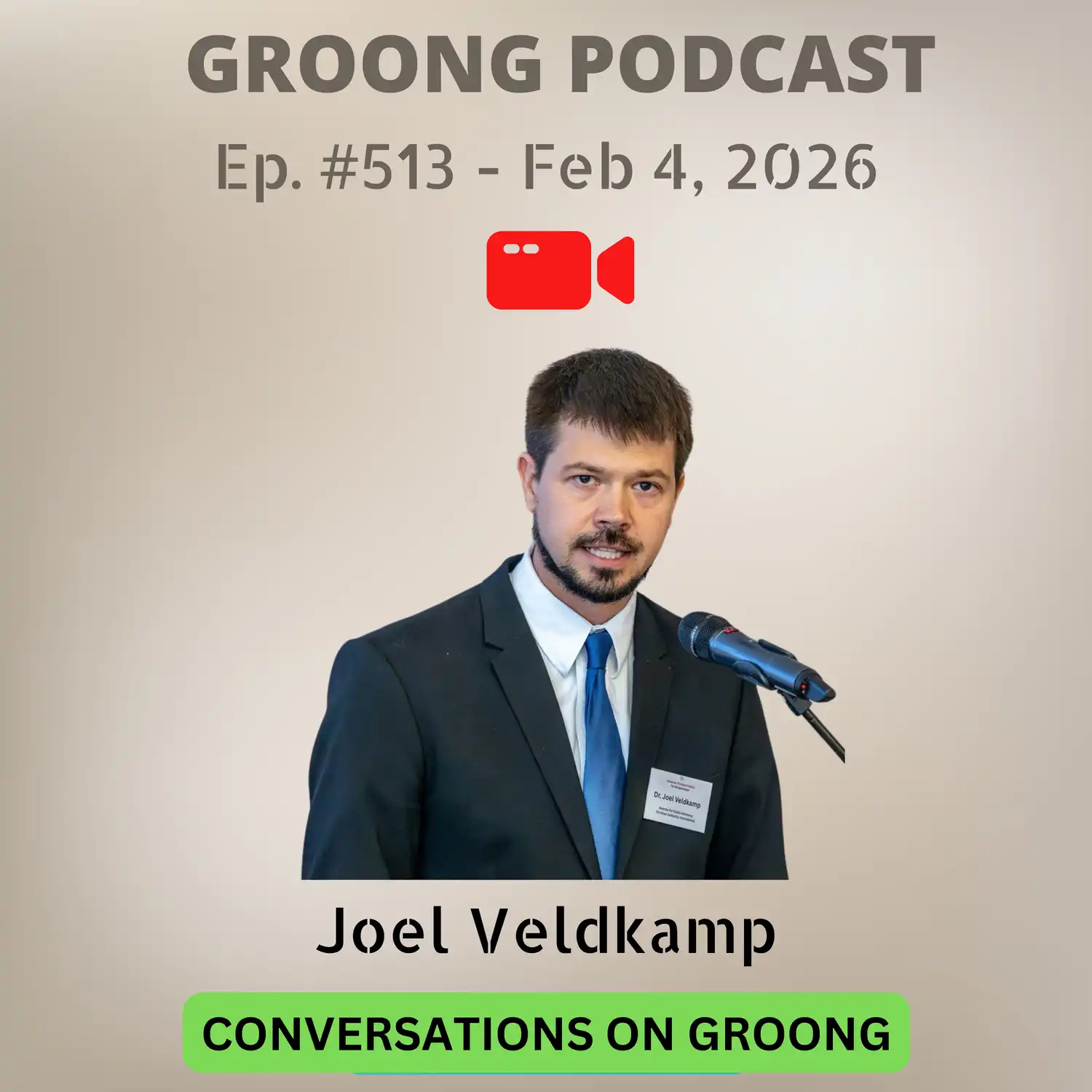
Groong Links:
Guest:
Topics:
- CSI Visits Jailed Cleric
- IRF Summit
- PACE MP Speaks Up
Episode 513 | Recorded: February 3, 2026
#ArmenianChurch #ReligiousFreedom #ClergyArrests #IRFSummit2026 #ChristianSolidarityInternational
Joel Veldkamp - Christian Solidarity International Visits Armenian Bishops in Jail | Ep 513, Feb 4, 2026 [EP513]
Posted on Wednesday, Feb 4, 2026 | Category: Armenia, Politics, Armenian Church, Artsakh, Nagorno Karabakh, Human Rights, Artsakh Blockade, China, NATO, IranGroong Links:
Guest:
Topics:
- CSI Visits Jailed Cleric
- IRF Summit
- PACE MP Speaks Up
Episode 513 | Recorded: February 3, 2026
#ArmenianChurch #ReligiousFreedom #ClergyArrests #IRFSummit2026 #ChristianSolidarityInternational
Asbed & Hovik - Iran, Varchaband, War on Church, Mehmet Oz, Strong Armenia, Noragyugh | Ep 512, Feb 1, 2026 [EP512]
Posted on Tuesday, Feb 3, 2026 | Category: Armenia, Politics, Artsakh, Nagorno Karabakh, Iran, Israel, Azerbaijan, Armenian Church, BRICS, Russia, Turkey, China, India, Ukraine | Series: wir, video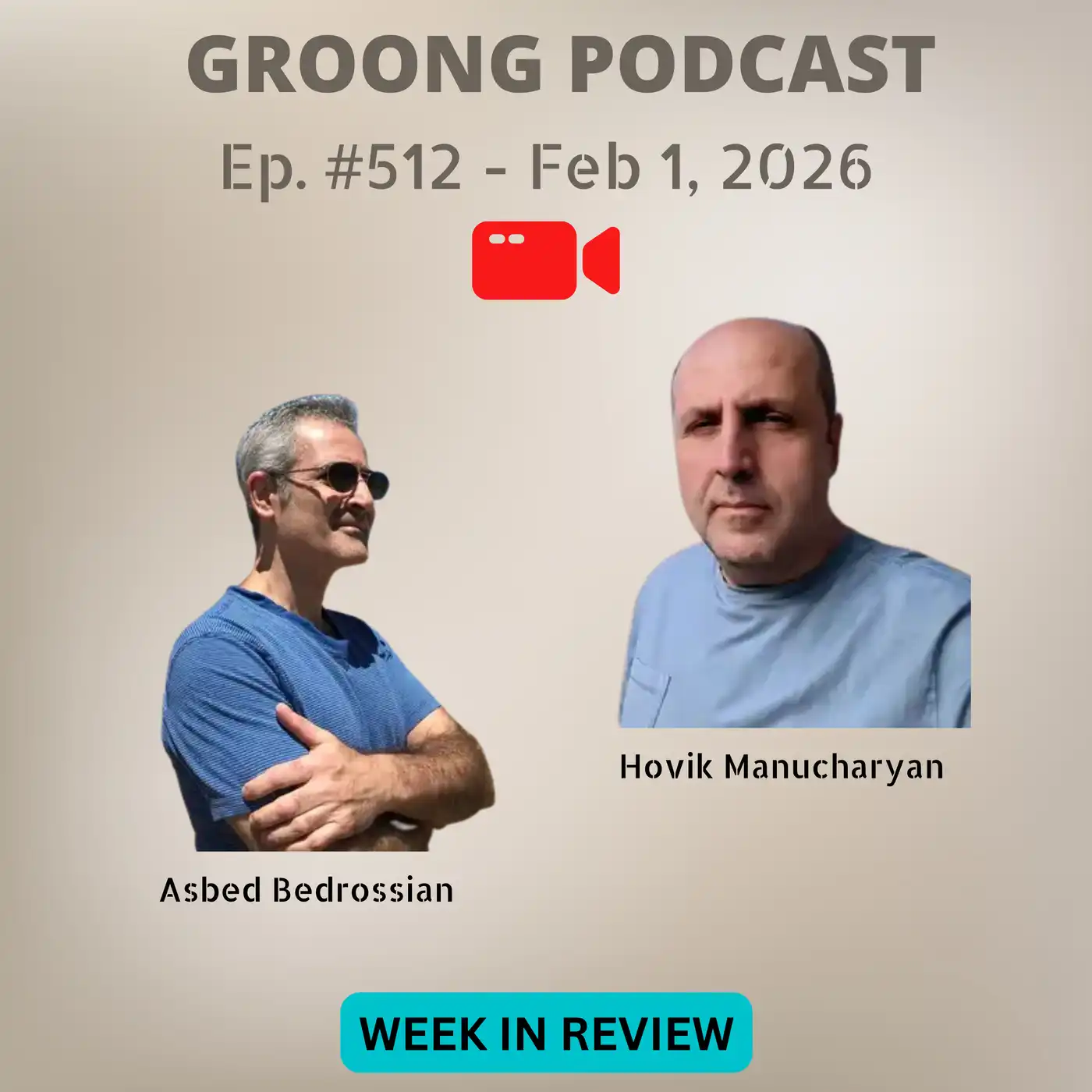
Groong Links:
Topics:
- Iran Conflict
- Varchaband
- War on Armenian Church
- Mehmet Oz vs Armenian Americans
- Narek Karapetyan and Strong Armenia
- A Big Beautiful Noragyugh
Episode 512 | Recorded: February 2, 2026
#IranIsraelWar #TrumpArmada #ArmenianChurch #Pashinyan #ArmenianDiaspora
Asbed & Hovik - Iran, Varchaband, War on Church, Mehmet Oz, Strong Armenia, Noragyugh | Ep 512, Feb 1, 2026 [EP512]
Posted on Tuesday, Feb 3, 2026 | Category: Armenia, Politics, Artsakh, Nagorno Karabakh, Iran, Israel, Azerbaijan, Armenian Church, BRICS, Russia, Turkey, China, India, UkraineGroong Links:
Topics:
- Iran Conflict
- Varchaband
- War on Armenian Church
- Mehmet Oz vs Armenian Americans
- Narek Karapetyan and Strong Armenia
- A Big Beautiful Noragyugh
Episode 512 | Recorded: February 2, 2026
#IranIsraelWar #TrumpArmada #ArmenianChurch #Pashinyan #ArmenianDiaspora
Sergei Melkonian - Syria, Iran Unrest, TRIPP, Armenian Parliamentary Elections | Ep 508, Jan 18, 2026 [EP508]
Posted on Tuesday, Jan 20, 2026 | Category: Armenia, Politics, Artsakh, Nagorno Karabakh, Azerbaijan, Turkey, Russia, Syria, Iran, Israel, China, Geopolitics, Middle East, Georgia, Ukraine, Economy, India, European Union | Series: wir, video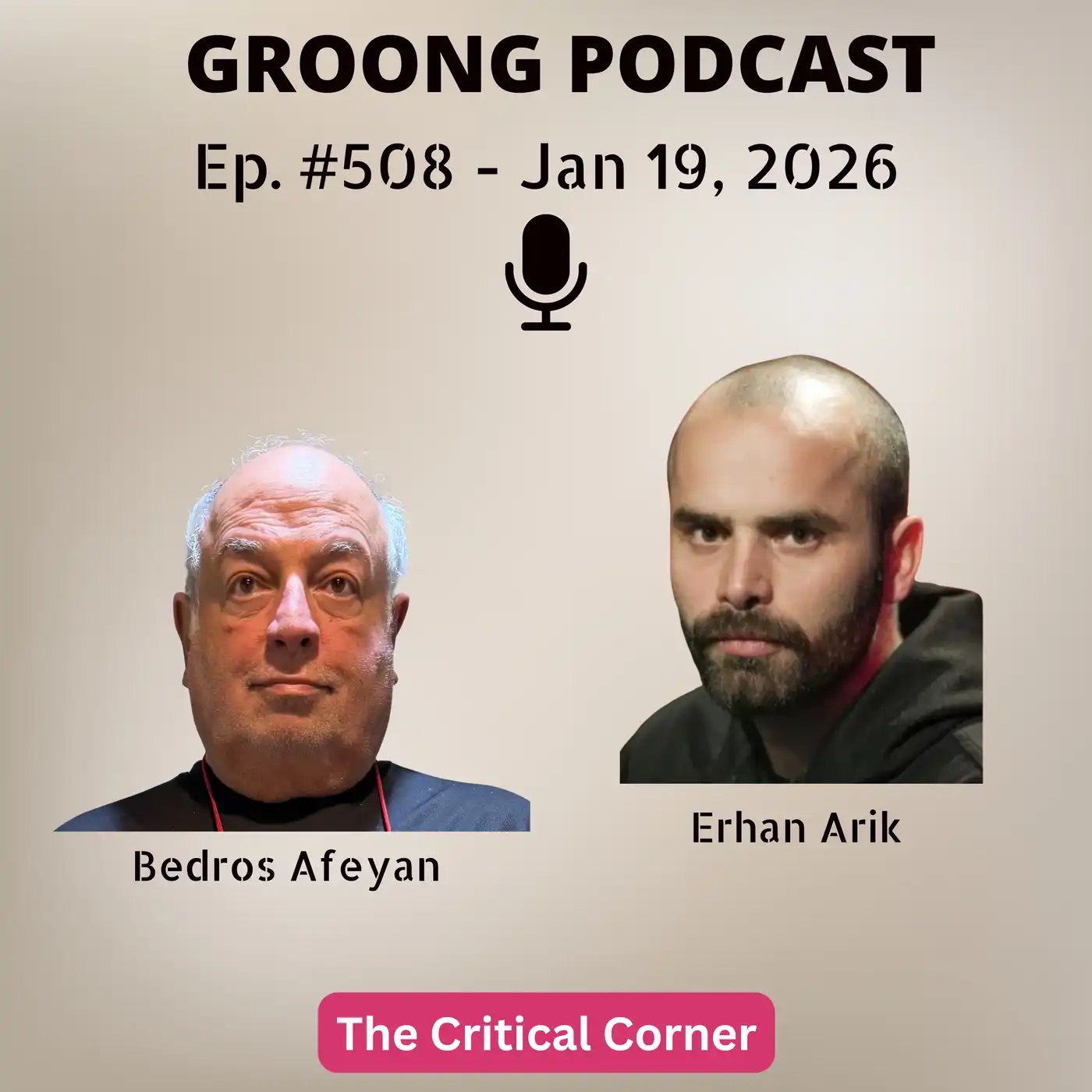
Groong Links:
Guest:
Topics:
- Syria, Kurds, Turkish advance
- Iran Unrest, War Postponed
- TRIPP and sovereignty dispute
- 2026 Elections and Foreign Influence
Episode 508 | Recorded: January 19, 2026
#ArmenianNews #Syria #Iran #ZangezurCorridor #TRIPP #Geopolitics
Sergei Melkonian - Syria, Iran Unrest, TRIPP, Armenian Parliamentary Elections | Ep 508, Jan 18, 2026 [EP508]
Posted on Tuesday, Jan 20, 2026 | Category: Armenia, Politics, Artsakh, Nagorno Karabakh, Azerbaijan, Turkey, Russia, Syria, Iran, Israel, China, Geopolitics, Middle East, Georgia, Ukraine, Economy, India, European UnionGroong Links:
Guest:
Topics:
- Syria, Kurds, Turkish advance
- Iran Unrest, War Postponed
- TRIPP and sovereignty dispute
- 2026 Elections and Foreign Influence
Episode 508 | Recorded: January 19, 2026
#ArmenianNews #Syria #Iran #ZangezurCorridor #TRIPP #Geopolitics
Pietro Shakarian - Iran, Russia, and the Geopolitics of Post-Soviet Eurasia | Ep 506, Jan 16, 2026 [EP506]
Posted on Friday, Jan 16, 2026 | Category: Armenia, History, Iran, Russia, Azerbaijan, Turkey, Israel, Nagorno Karabakh, BRICS, European Union, Syria, China, Ukraine, Genocide, India, NATO, Georgia, Middle East, Human Rights | Series: cog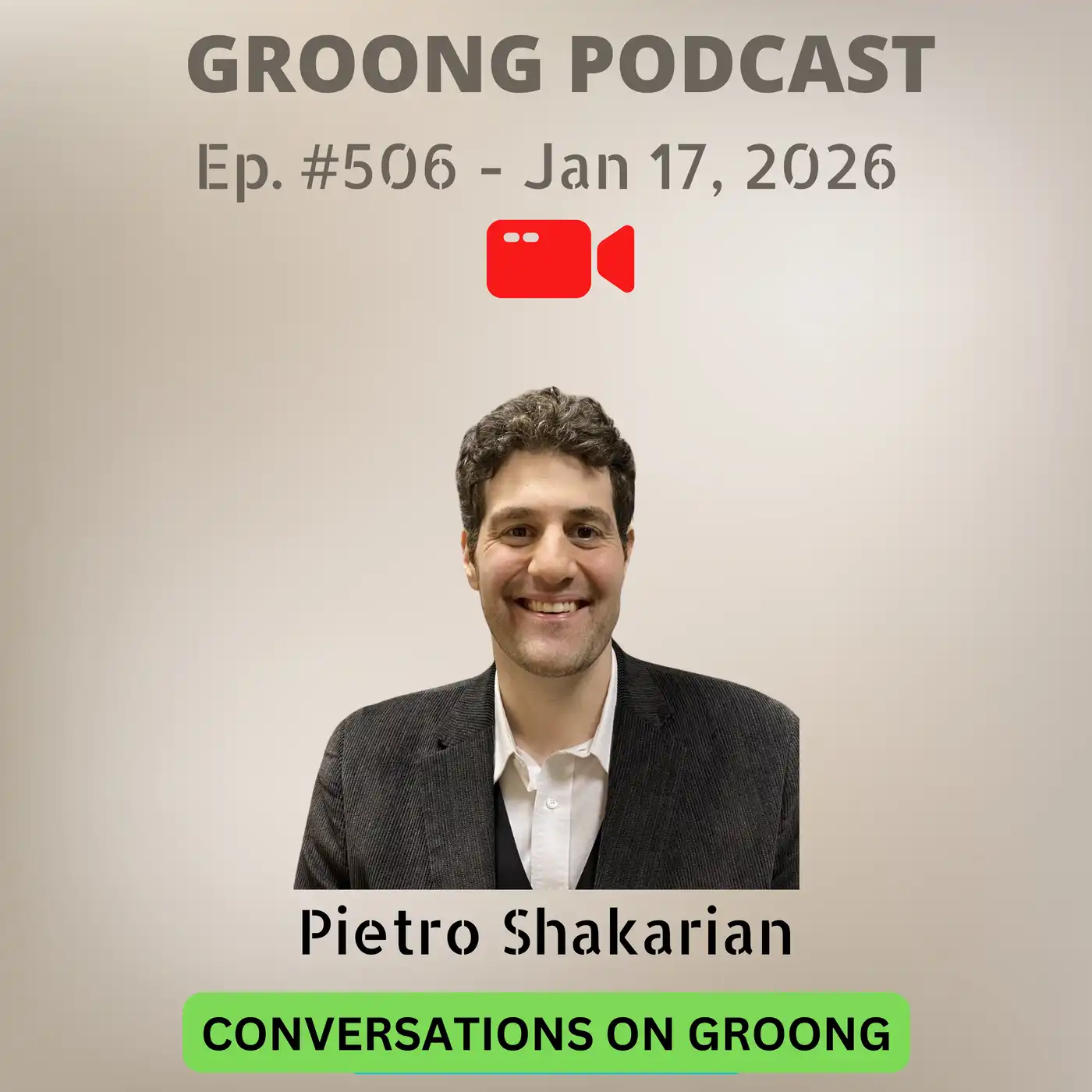
Groong Links:
Guest:
Topics:
- Unrest in Iran
- Russia-Iran Partnership
- Solovyovâs Statements
- Trumpâs âTRIPP Wireâ in the Caucasus
- Release of Armenian hostages
Episode 506 | Recorded on January 14, 2026
Pietro Shakarian - Iran, Russia, and the Geopolitics of Post-Soviet Eurasia | Ep 506, Jan 16, 2026 [EP506]
Posted on Friday, Jan 16, 2026 | Category: Armenia, History, Iran, Russia, Azerbaijan, Turkey, Israel, Nagorno Karabakh, BRICS, European Union, Syria, China, Ukraine, Genocide, India, NATO, Georgia, Middle East, Human RightsGroong Links:
Guest:
Topics:
- Unrest in Iran
- Russia-Iran Partnership
- Solovyovâs Statements
- Trumpâs âTRIPP Wireâ in the Caucasus
- Release of Armenian hostages
Episode 506 | Recorded on January 14, 2026