
Groong Links:
Guest:
Topics:
- Iran War Update
- IRI Poll Review
- Political Landscape
Episode 521 | Recorded: March 10, 2026
#IranWar #EpicFury #MiddleEastWar #ArmeniaForeignPolicy #Sumgait1988 #IranIsraelConflict
Show Notes
Summary
We discuss with Hrant Mikaelian the expanding war on Iran and what it could mean for the region. We took a close look at the latest IRI poll and its disputed methodology and findings, and the emerging shape of Armenia’s parliamentary race. Hrant Mikaelian argued that Iran’s leadership transition signals greater resolve rather than collapse, that Azerbaijan is still constrained from direct action against Iran unless the Iranian state seriously weakens, and that the IRI poll raises major methodological and interpretive questions. The discussion then turned to the opposition field in Armenia, where newer forces may have room to grow, but where media imbalance and weak opposition reach remain major structural obstacles.
Main Topics Addressed
Iran war update
- The panel discussed the 11th day of the U.S.-Israeli war on Iran, including attacks on Iranian oil infrastructure near Tehran and the broader economic and geopolitical fallout.
- Hrant argued that the selection of Ayatollah Mojtaba Khamenei signaled continuity and escalation rather than regime collapse, and reflected the growing weight of Iran’s security apparatus.
- The conversation examined whether the war was likely to move toward diplomacy, what an American off-ramp might look like, and what Iran could plausibly count as a strategic victory.
- They also discussed how the war could affect the TRIPP and Armenia’s regional position.
Azerbaijan-Iran tensions during the war
- The hosts reviewed the rapid escalation after Azerbaijan accused Iran of a drone strike, followed by threats, mobilization, and then a quick de-escalation after the Aliyev-Pezeshkian call.
- Hrant described Azerbaijan’s behavior as opportunistic but constrained, arguing that Baku is unlikely to enter the war directly unless Iran faces state collapse or severe disintegration.
- The conversation also explored the apparent difference between the posture of Iran’s presidency and that of the IRGC on Azerbaijan, Israel, and the regional balance.
IRI poll review
- The show examined the latest IRI poll, focusing first on the polling window, sample size, reported margin of error, and especially the unusually high 22% response rate.
- The hosts and Hrant questioned whether the timing of the poll, during JD Vance’s visit to Armenia, may have affected responses.
- They also discussed Pashinyan’s meetings with IRI president Dan Twining, and whether the government appeared to have advance familiarity with the poll’s results.
- The discussion then moved through the poll’s substantive findings, including:
- the sharp rise in respondents saying Armenia is moving in the right direction
- the surprisingly lower salience of national security compared with other recent polling
- household economic responses that seemed internally inconsistent, especially the rise in reported poverty
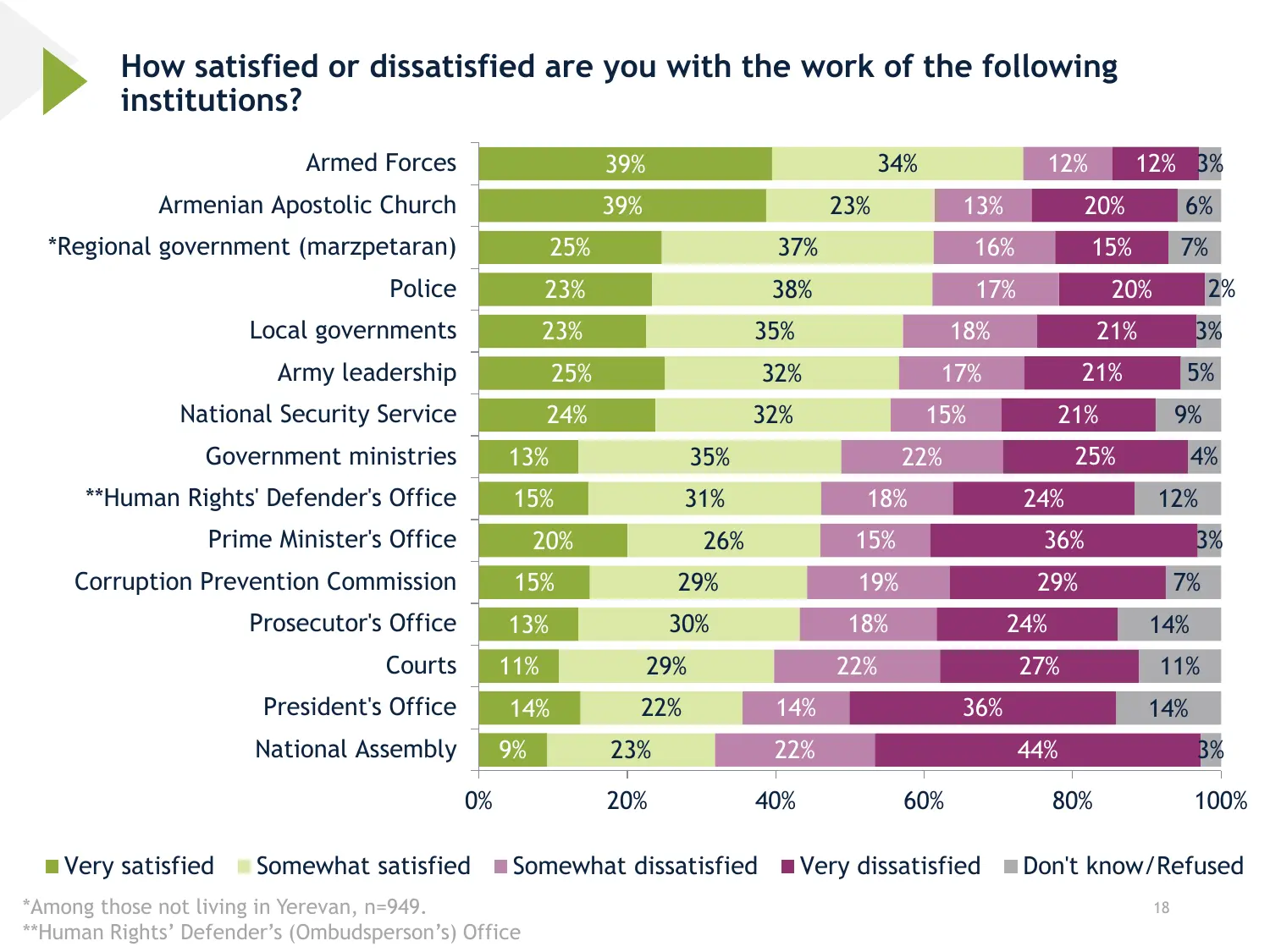
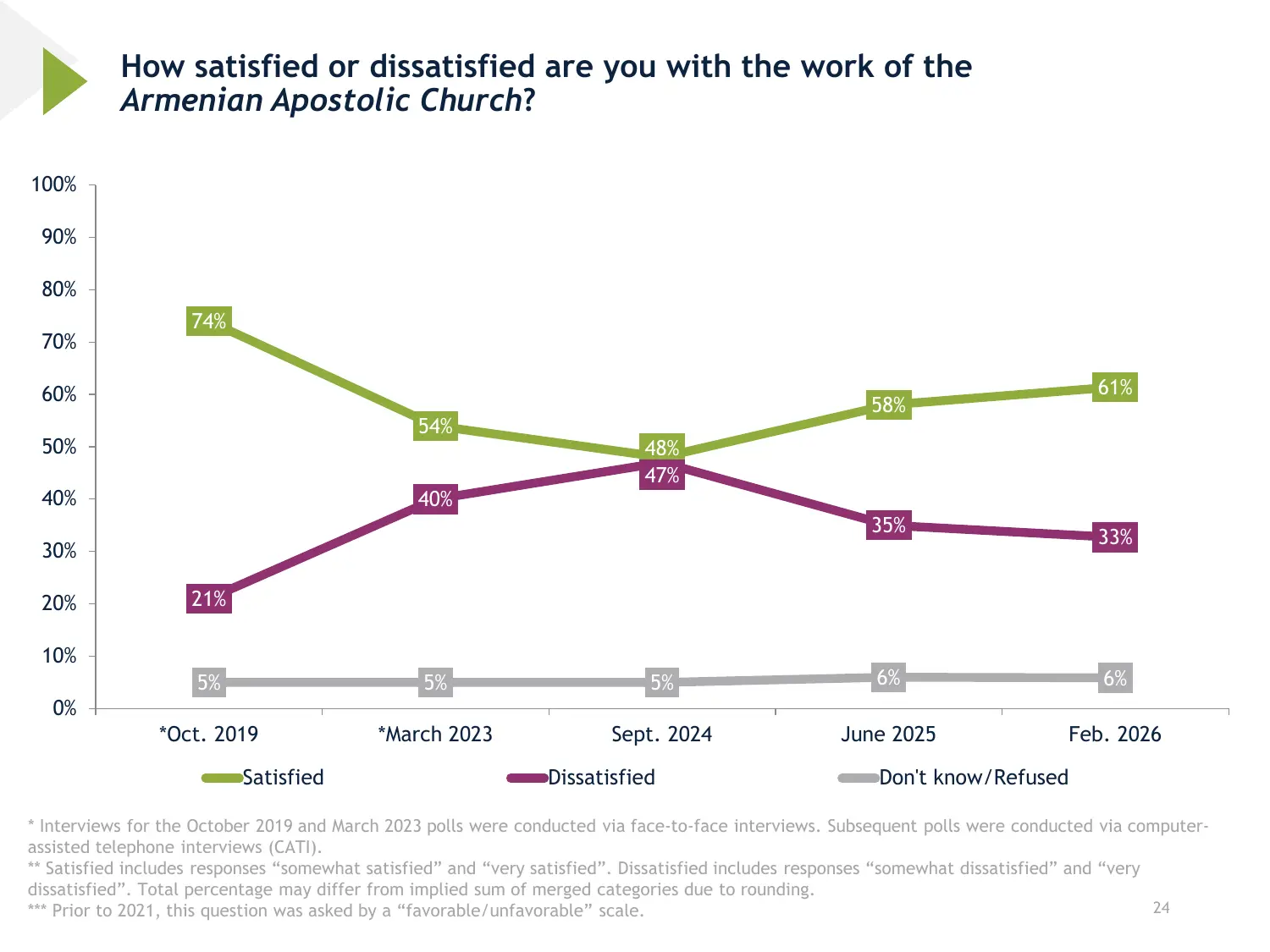
- institutional trust, where the Armenian Apostolic Church continued to rate strongly
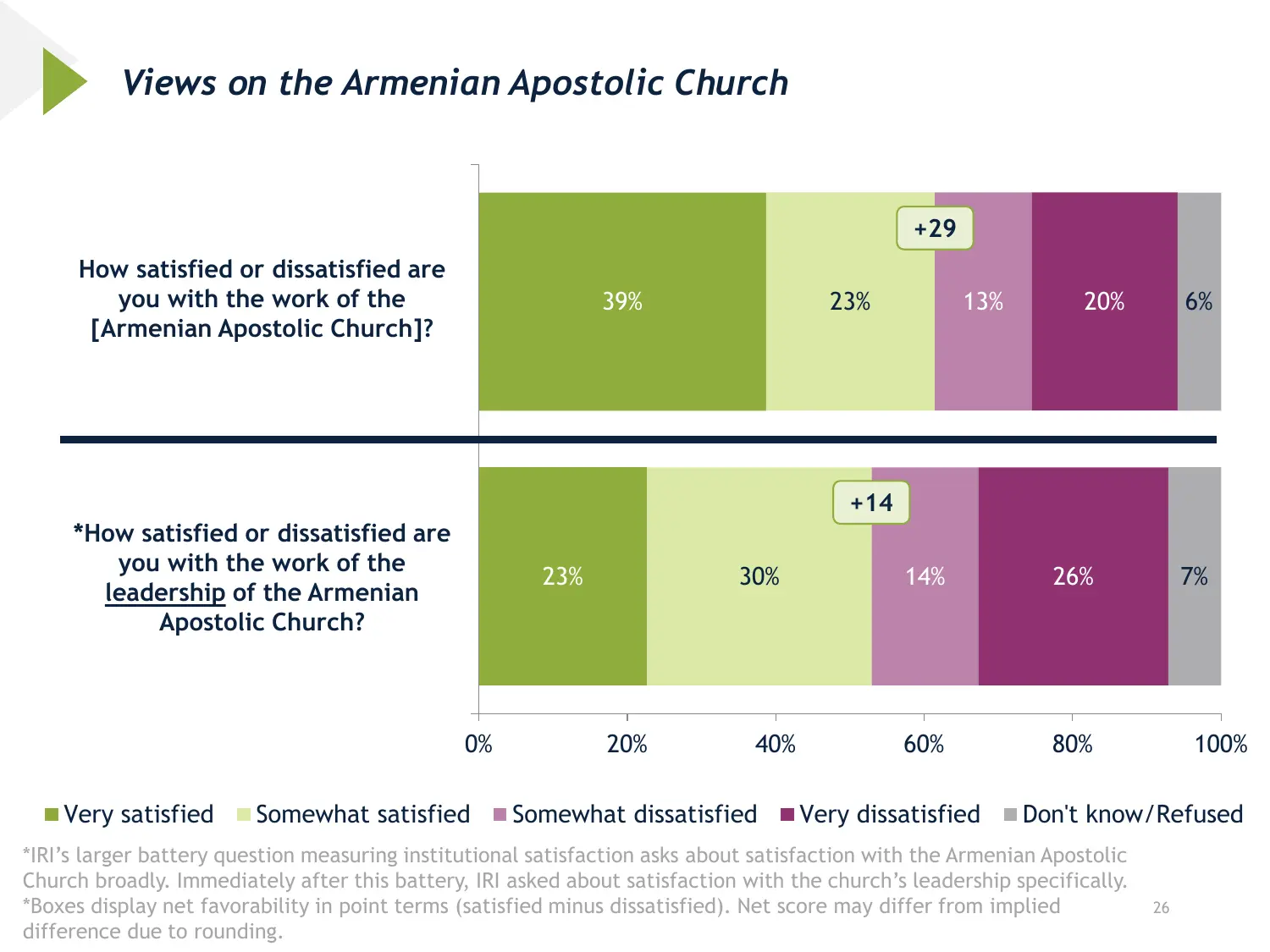
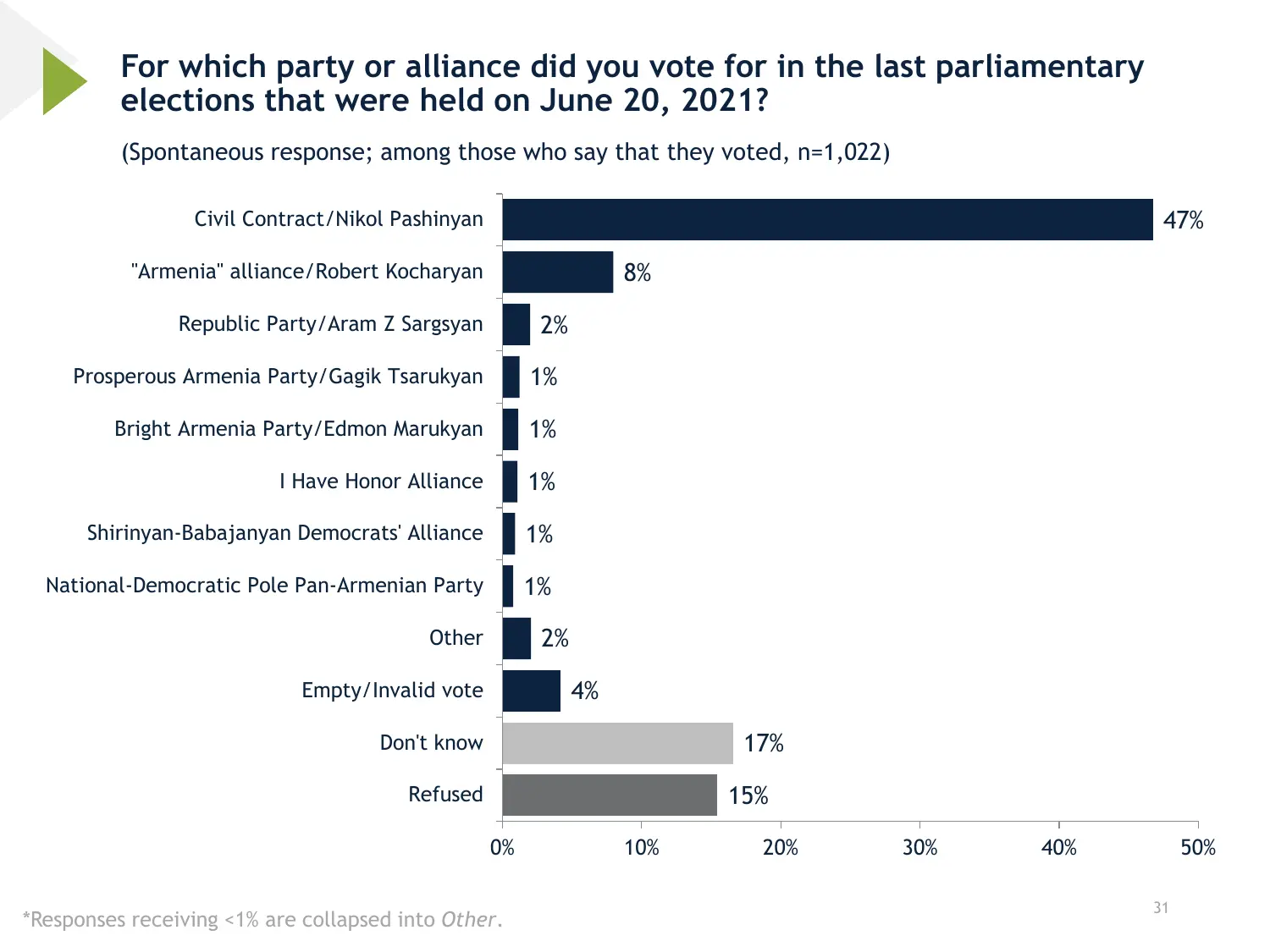
- anomalies around recalled turnout in the 2021 election
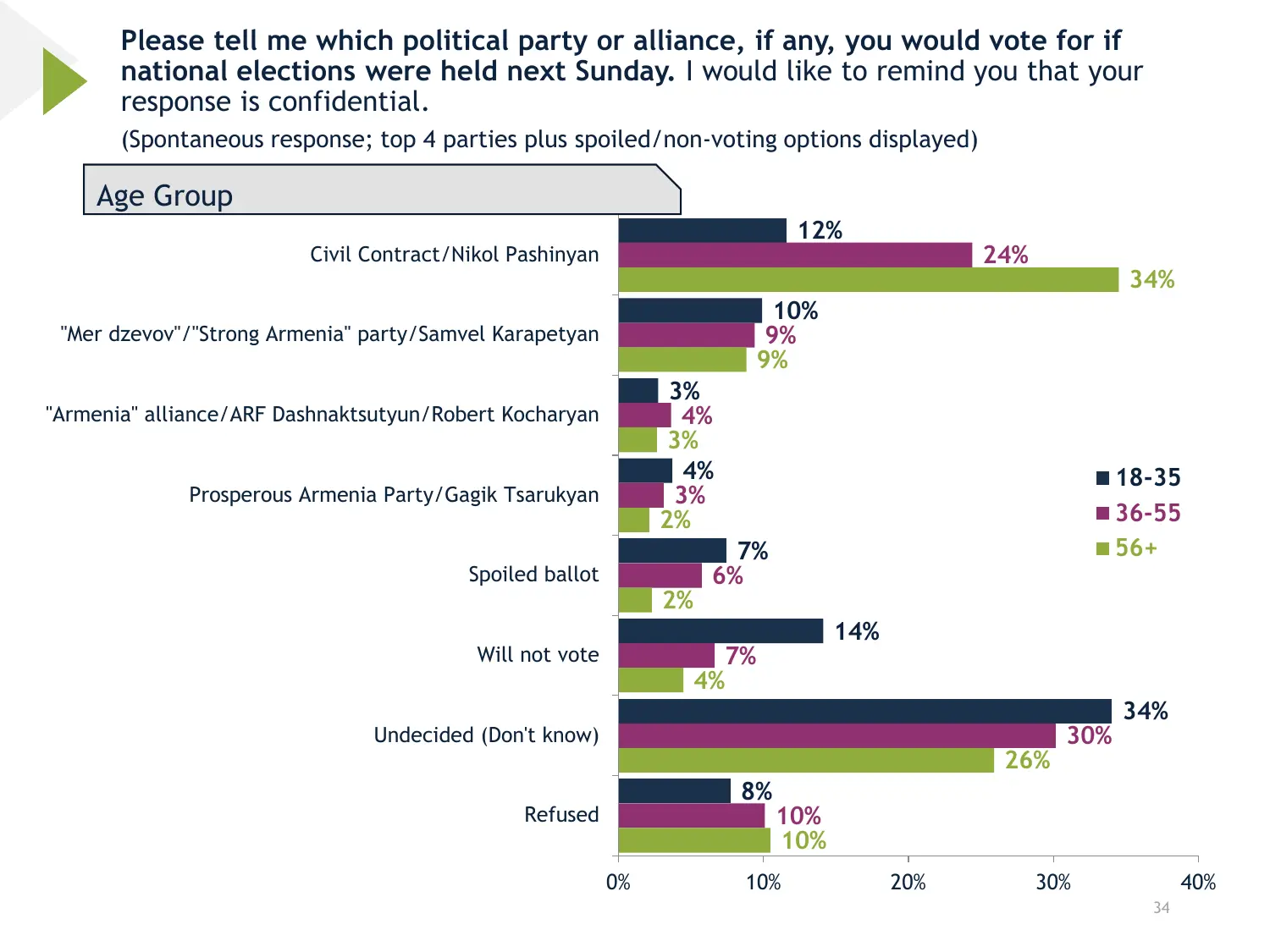
- party preference numbers, especially the gap between the IRI and Empirica findings on Civil Contract and Strong Armenia
Slide 2: Detailed Methodology
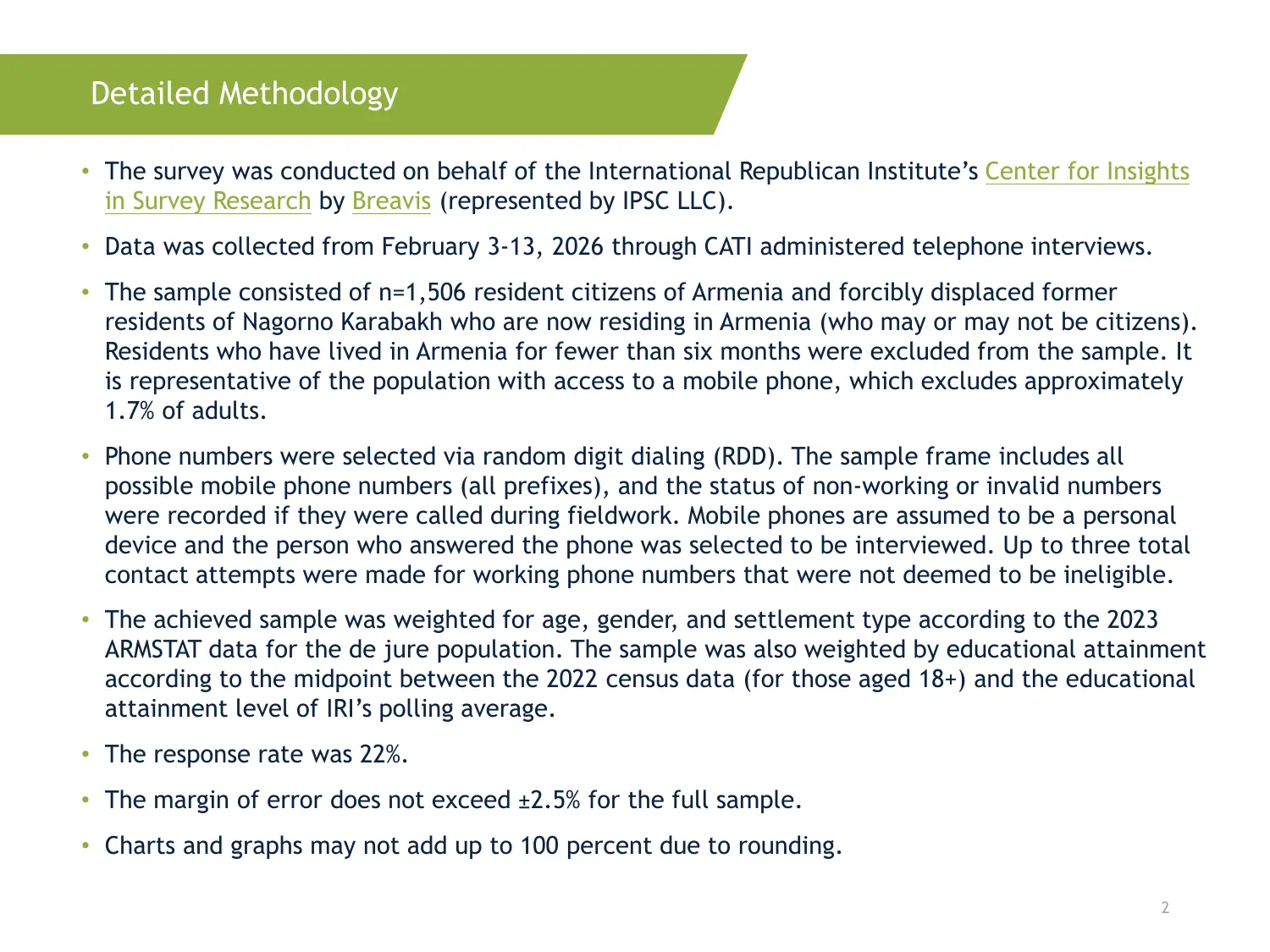
Slide 6: Generally speaking, do you think that Armenia is heading in the right direction or the wrong direction?
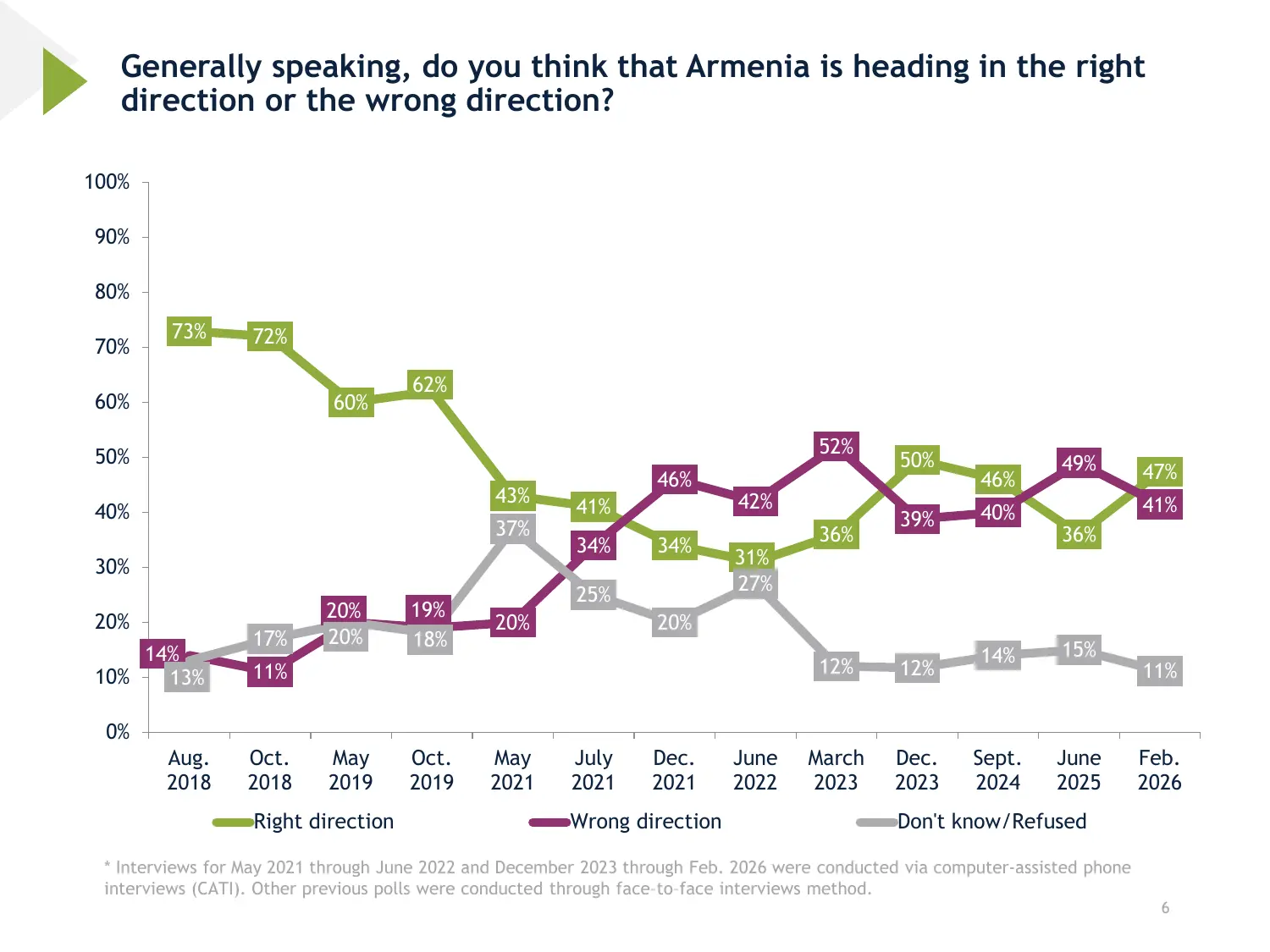
Slide 8: What are the main problems Armenia is currently facing?
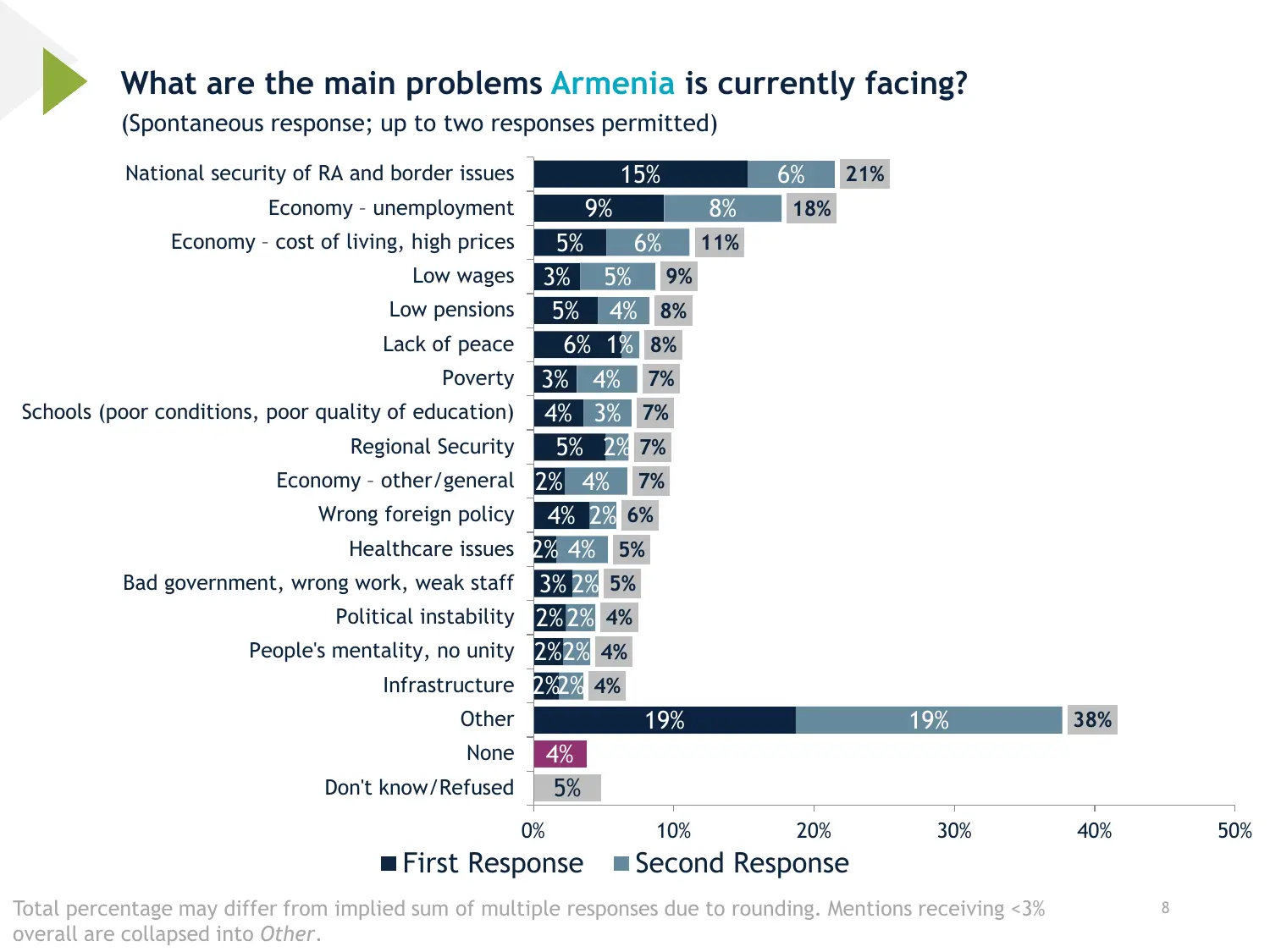
Slide 14: Household: Problems, Time Series
Slide 18: Satisfaction with Institutions
Slide 24: Institutions: Church
Slide 26: Institutions: Church vs. Church Leadership
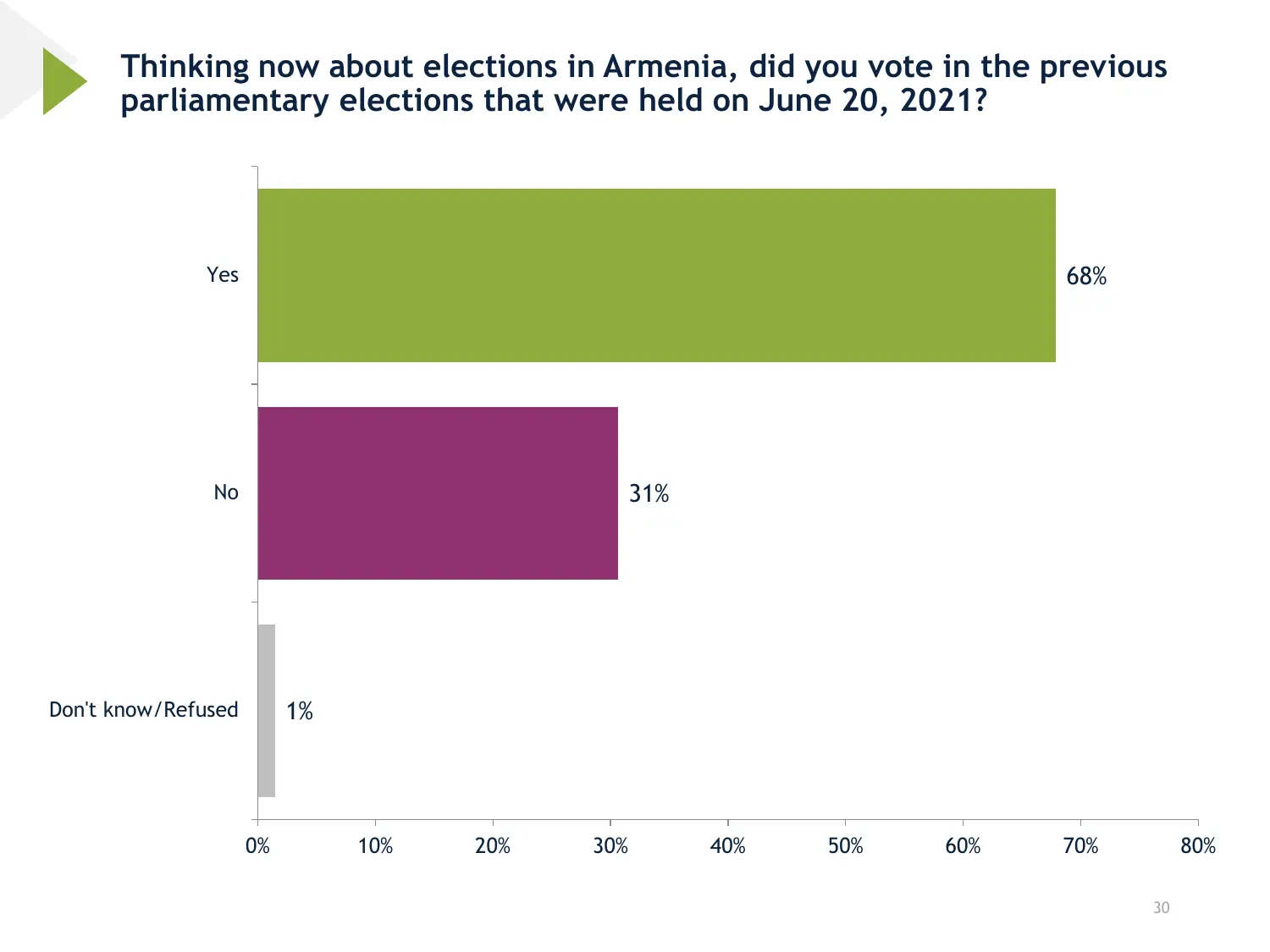
Slide 30: Did you vote in June, 2021
Slide 31: Which party did you vote for in 2021?
Slide 34: Which party did you vote for if elections were to be held next Sunday]
Armenia’s political landscape before the elections
- The final part of the show surveyed the opposition field ahead of the parliamentary elections.
- Hrant framed the race as different from prior elections because it is no longer only a referendum on the current government versus former governments.
- He discussed the roles, prospects, and voter bases of:
- Hayastan / Kocharyan
- Samvel Karapetyan’s Strong Armenia
- Arman Tatoyan and Avetik Chalabyan
- smaller pro-government or spoiler-type formations
- A key thread in this section was that newer opposition actors may benefit from not being associated either with Pashinyan’s failures or with the older ruling elite.
- The episode closed with a discussion of why the opposition still struggles to convert dissatisfaction into support, with Hrant pointing to media imbalance, weak national reach, and a strongly pro-government broadcast landscape.
Key Questions Discussed
- What signal did Iran send by elevating Mojtaba Khamenei after the assassination of Ali Khamenei?
- Is Iran showing signs of military exhaustion, or does it still retain escalation capacity?
- Could Azerbaijan be pulled into the war against Iran, or is Baku still deterred by the risks?
- Why did the Azerbaijan-Iran confrontation escalate so quickly, then cool just as fast?
- How credible is the IRI poll’s reported 22% response rate?
- Did the timing of the poll, during JD Vance’s Armenia visit, shape the findings?
- Why do the IRI poll’s direction-of-country numbers differ so sharply from other recent polls?
- How can poverty rise while some other household indicators appear to improve?
- What do the poll’s church and institutional trust findings suggest about the coming elections?
- How can 68% of respondents say they voted in 2021 when official turnout was 49.3%?
- Why does the IRI party-preference slide differ so much from the Empirica numbers?
- Which opposition forces have real growth potential, and what is blocking them from reaching undecided voters?
Referenced Articles & Sources
- Pezeshkian Apology Report, Politico Europe
- Iran-Azerbaijan Incident, Iran in Yerevan
- Aliyev-Pezeshkian Call and Aid Announcement, Ultra Ehsan
- Previous MPG Poll Discussion, Groong Ep. 521
- Pashinyan Meeting with IRI President Dan Twining
- Survey Response Rates Report, LAPOP / Vanderbilt
- Groong Ep. 521 Episode Page
- Episode 521
Wrap-up
Don’t forget to support us:
That’s our show! We hope you found it useful. Please find us on Social Media and follow us everywhere you get your Armenian news.
Thanks to Laura Osborn for the music on our podcasts.
Guests
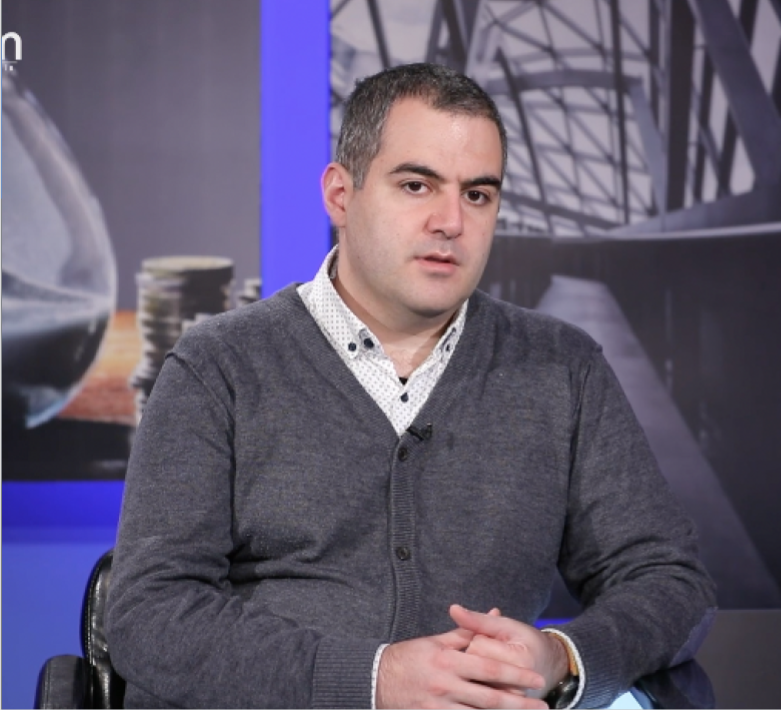
Hrant Mikaelian
Hrant Mikaelian is a political scientist and multidisciplinary researcher in social sciences based in Yerevan.
Hosts

Asbed Bedrossian
Asbed Bedrossian is an IT professional, and for years oversaw the central IT enterprise infrastructure and services at USC. His decades of experience spanned across IT strategy, enterprise architecture, infrastructure, cybersecurity, enterprise applications, data center operations, high performance computing, ITSM, ITPM, and more.
Asbed founded the Armenian News Network Groong circa 1989/1990, and co-founded the ANN/Groong podcast in 2020.
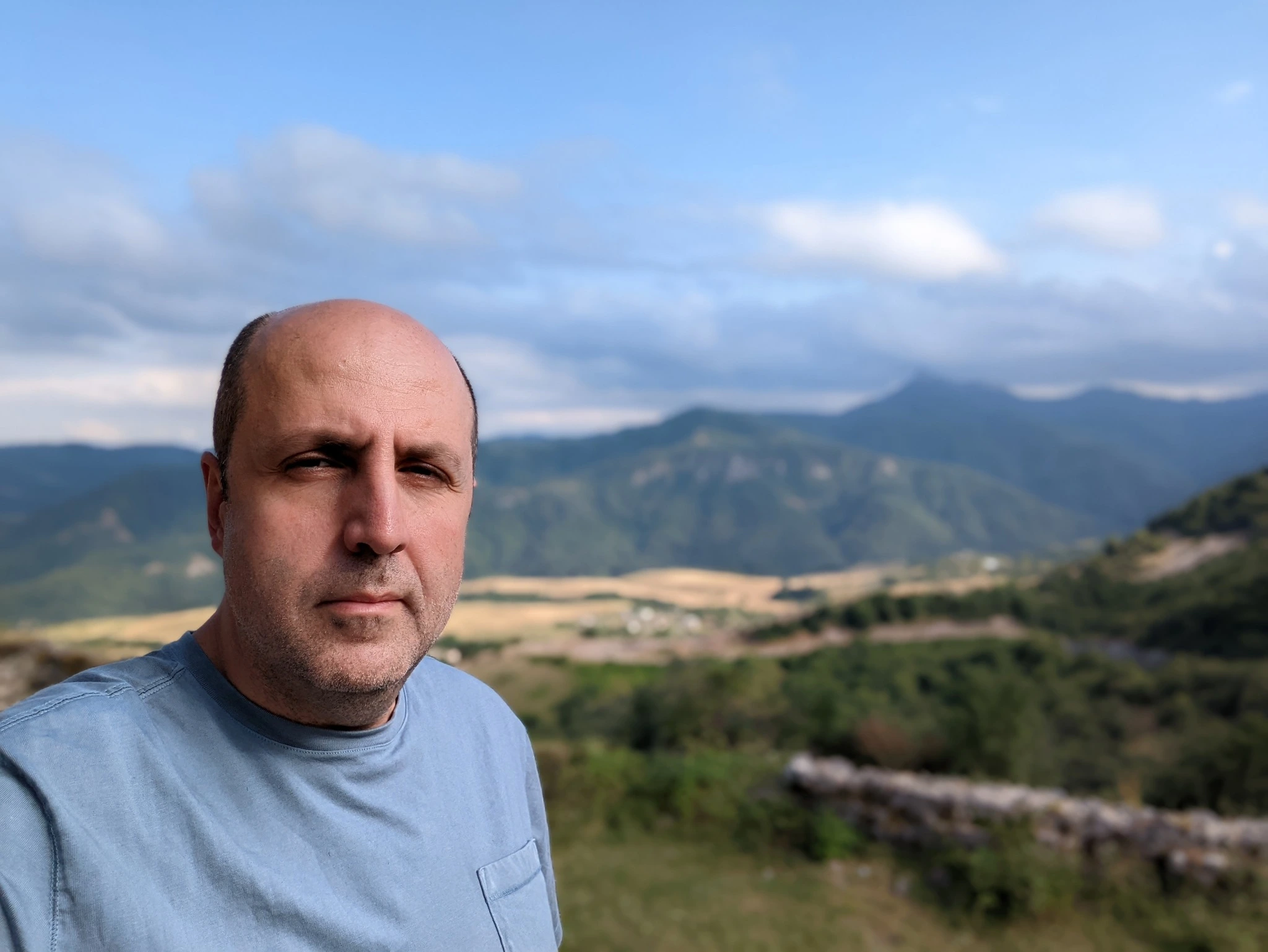
Hovik Manucharyan
Hovik Manucharyan is an information security engineer who moved from Seattle to Armenia in 2022. He co-founded the ANN/Groong podcast in 2020 and has been a contributor to Groong News since the late 1990s.
Disclaimer: The views expressed by Hovik Manucharyan on the ANN/Groong podcast are his own and do not necessarily reflect the opinions of his employer or any other organization.