Groong Links:
Guest:
Topics:
- Developments in Venezuela
- Attacks on Armenian Church Continue
- New MPG Poll Results
Episode 501 | Recorded: January 6, 2026
#VenezuelaCrisis #ArmenianChurch #MPGPoll #ArmeniaEconomy #Geopolitics
Show Notes
Summary
In this first Week in Review of 2026, we’re joined by Hrant Mikaelian as we examine three developments shaping Armenia’s political environment and regional context. We begin with the unprecedented U.S. abduction of Venezuelan President Nicolas Maduro and the implications for international law and smaller states. We then turn to the escalating confrontation between the Armenian government and the Armenian Apostolic Church, including renewed efforts to restructure the Church ahead of 2026. We conclude with a detailed review of the latest MPG poll results and an assessment of Armenia’s economic performance and rising national debt in 2025.
Developments in Venezuela
The United States carried out a special forces operation in Caracas that resulted in the abduction of Venezuelan President Nicolas Maduro from his official residence. The operation was widely condemned as a violation of international law, while several Western leaders publicly welcomed the outcome. Acting President Delcy Rodriguez signaled conditional cooperation with Washington, amid reports that elements within the Venezuelan leadership may have coordinated with the U.S. through intermediaries.
China and Russia criticized the operation and called for emergency discussions at the UN Security Council, but neither appears prepared to intervene directly. The episode raises fundamental questions about the collapse of international legal norms and the strategic logic behind Washington’s move.
Key questions discussed:
- Is international law effectively dead?
- Will Russia and China respond meaningfully, or accept the precedent?
- Could Venezuela become part of a broader geopolitical trade-off, such as Ukraine?
- What lessons should Armenia draw from this incident?
Attacks on the Armenian Apostolic Church Continue
Christmas Day in Armenia unfolded amid heightened tension as state media ignored the official Christmas Mass in Etchmiadzin, while Pashinyan attended a parallel service led by renegade clergy. Days earlier, the Prime Minister and a small group of bishops released a renewed “roadmap” for Church reform, including removing the Catholicos, appointing a vicar, renaming the Church, and imposing new governance mechanisms.
Critics argue this mirrors the government’s earlier approach to the judiciary and reflects either a personal vendetta or a broader attempt to neutralize an independent national institution ahead of the 2026 elections.
Key questions discussed:
- What political stage is being set for 2026 between the state and the Church?
- Why have a small number of bishops sided with the government?
- Is this campaign driven by geopolitics, personal grievance, or power consolidation?
- Are these reforms genuine or punitive?
MPG Poll Analysis
Methodology
The MPG poll was conducted using CATI methodology with a sample of 1,000 respondents and a margin of error of approximately ±3 percent. The survey captures public attitudes toward national direction, social cohesion, trust in institutions, and political participation.
Slide 3 – Most Important Issues Facing Armenia
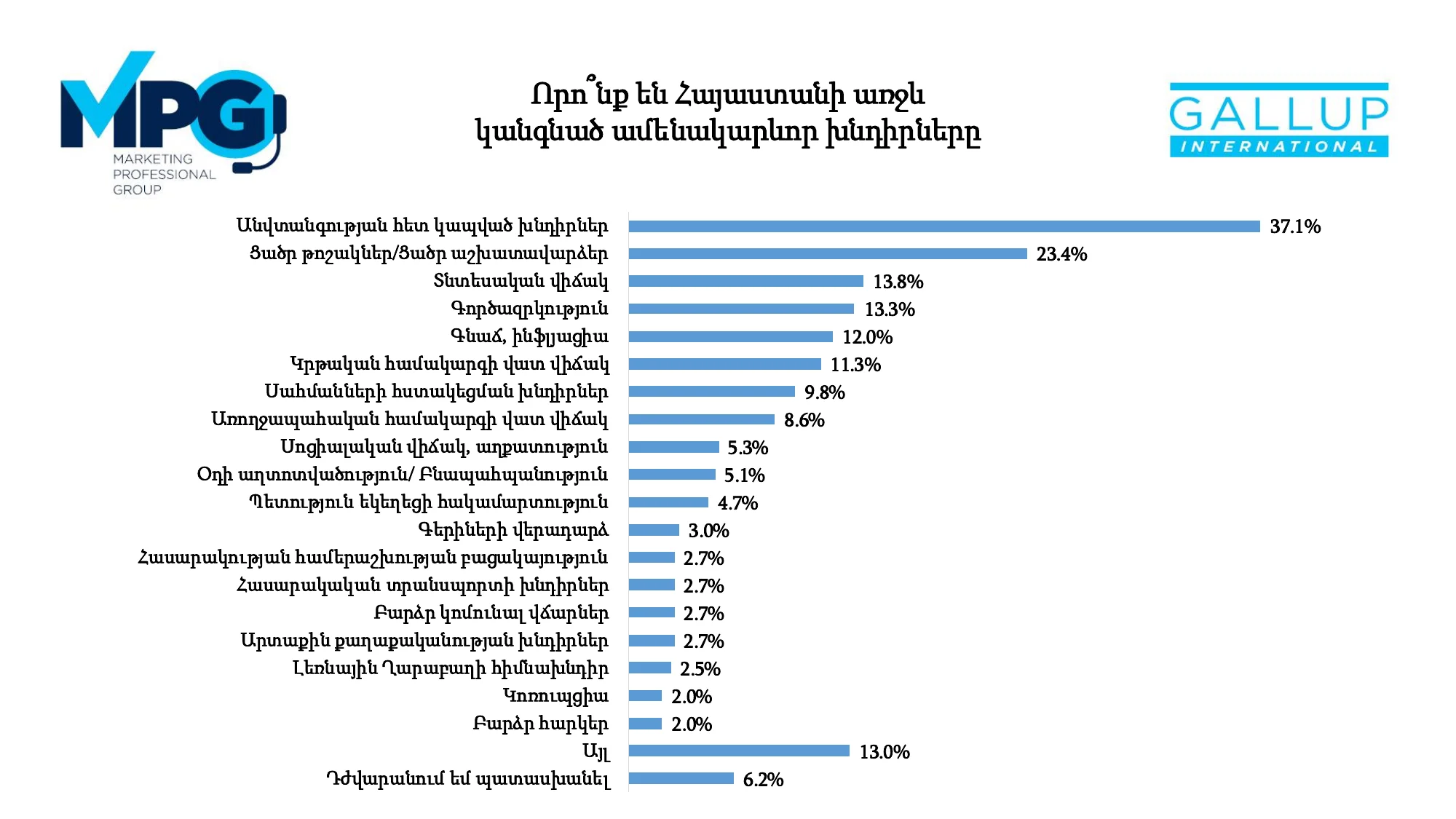
National security remains the top concern for respondents, followed by high expenses and low wages, the overall state of the economy, unemployment, and inflation. The dominance of security and economic issues suggests persistent public anxiety despite official narratives of peace and economic growth.
Slide 4 – Direction of the Country
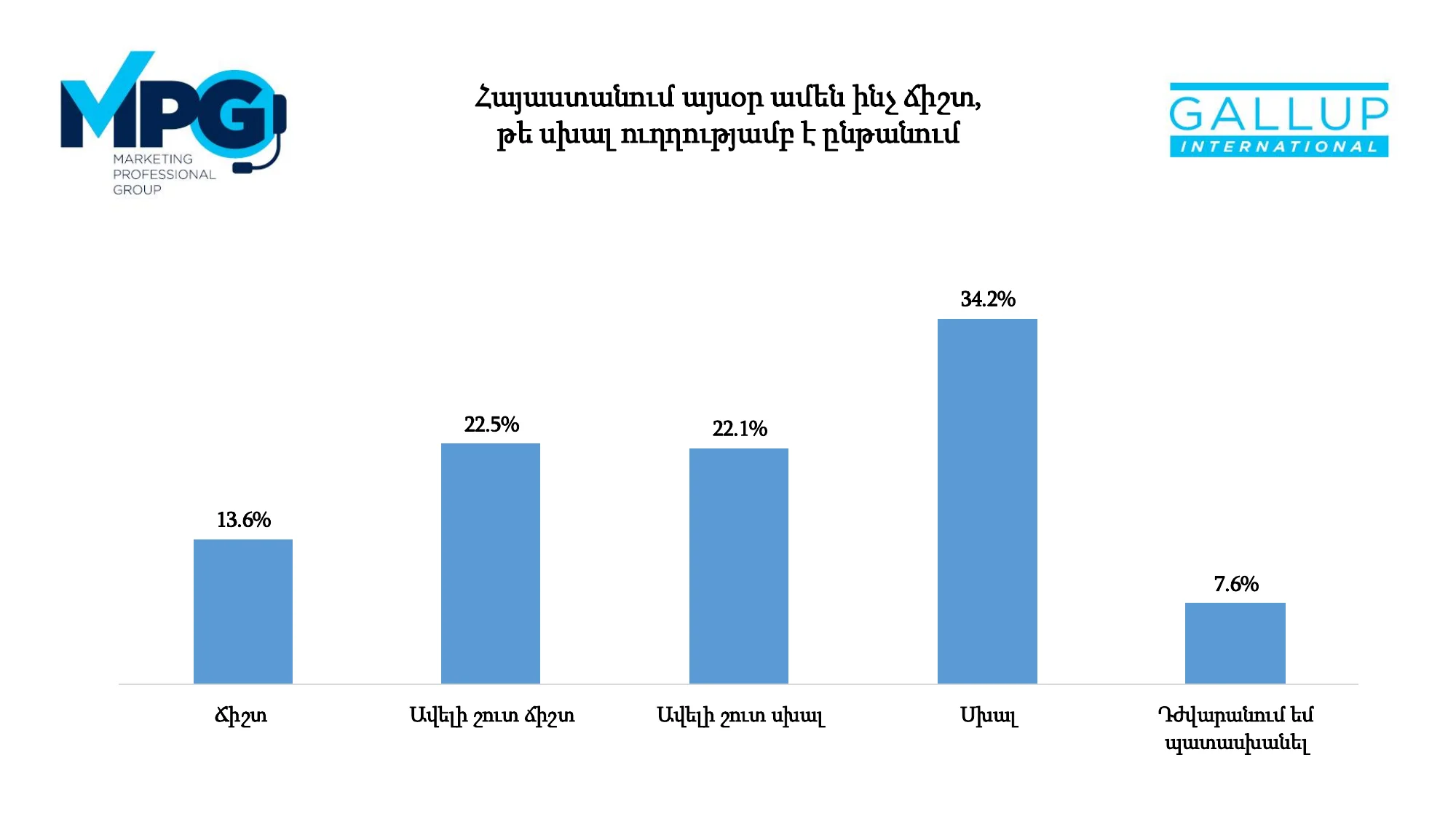
A plurality of respondents believe Armenia is moving in the wrong direction. Only a minority feel the country is on the right track, reinforcing perceptions of stagnation and uncertainty.
Slide 5 – Public Mood in Recent Months
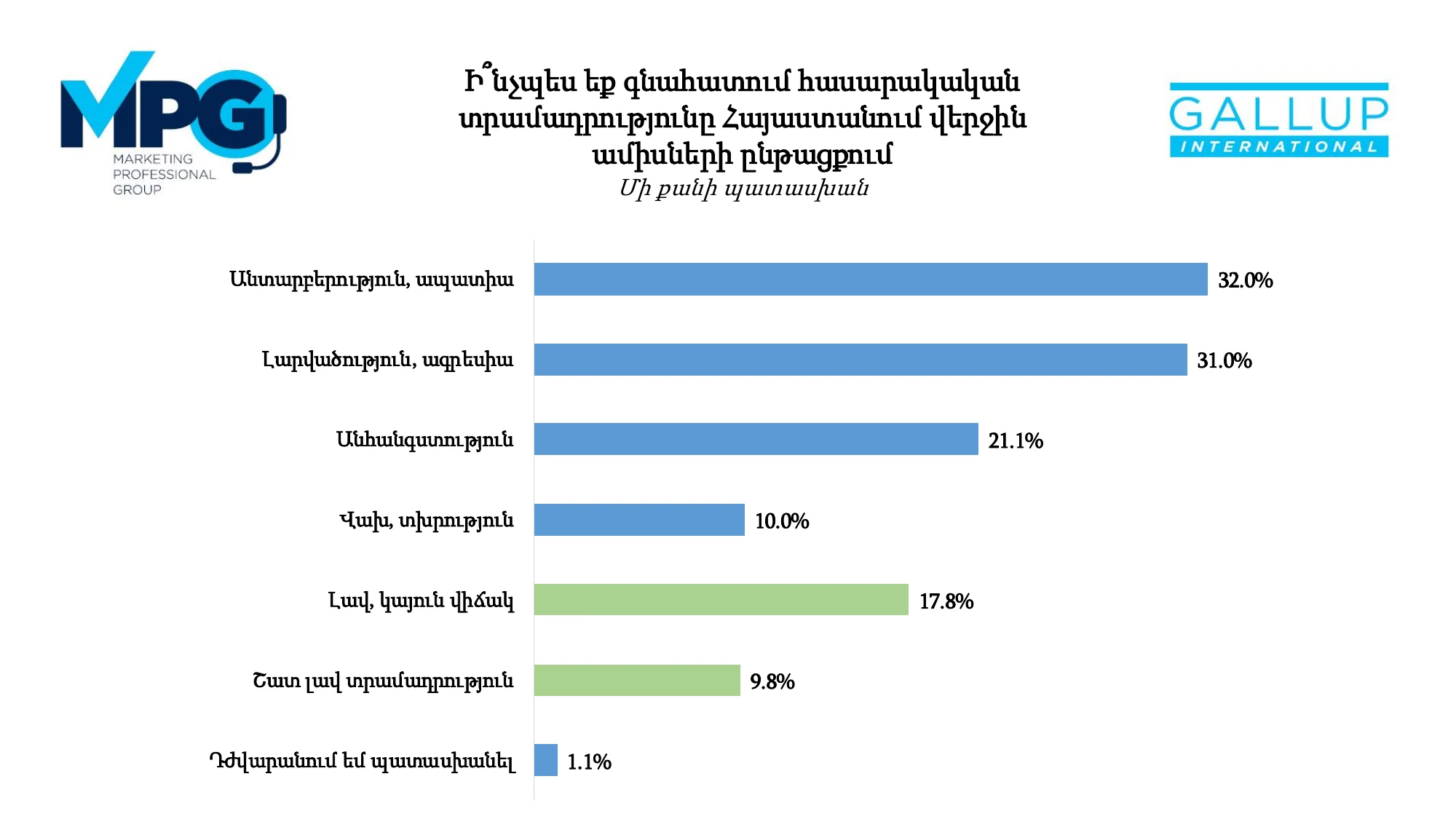
More than 60 percent of respondents describe the political situation as “very tense” or “rather tense.” Only a small fraction report calm conditions. This aligns with visible polarization, elite conflict, and the state–Church confrontation.
Discussion points:
- What are the consequences of prolonged societal tension?
- How does this square with the government’s “peace agenda”?
- Why has poverty remained high after eight years in power?
Slides 6–7 – The Voice of the People
Slide 6 – Ability to Influence Decisions
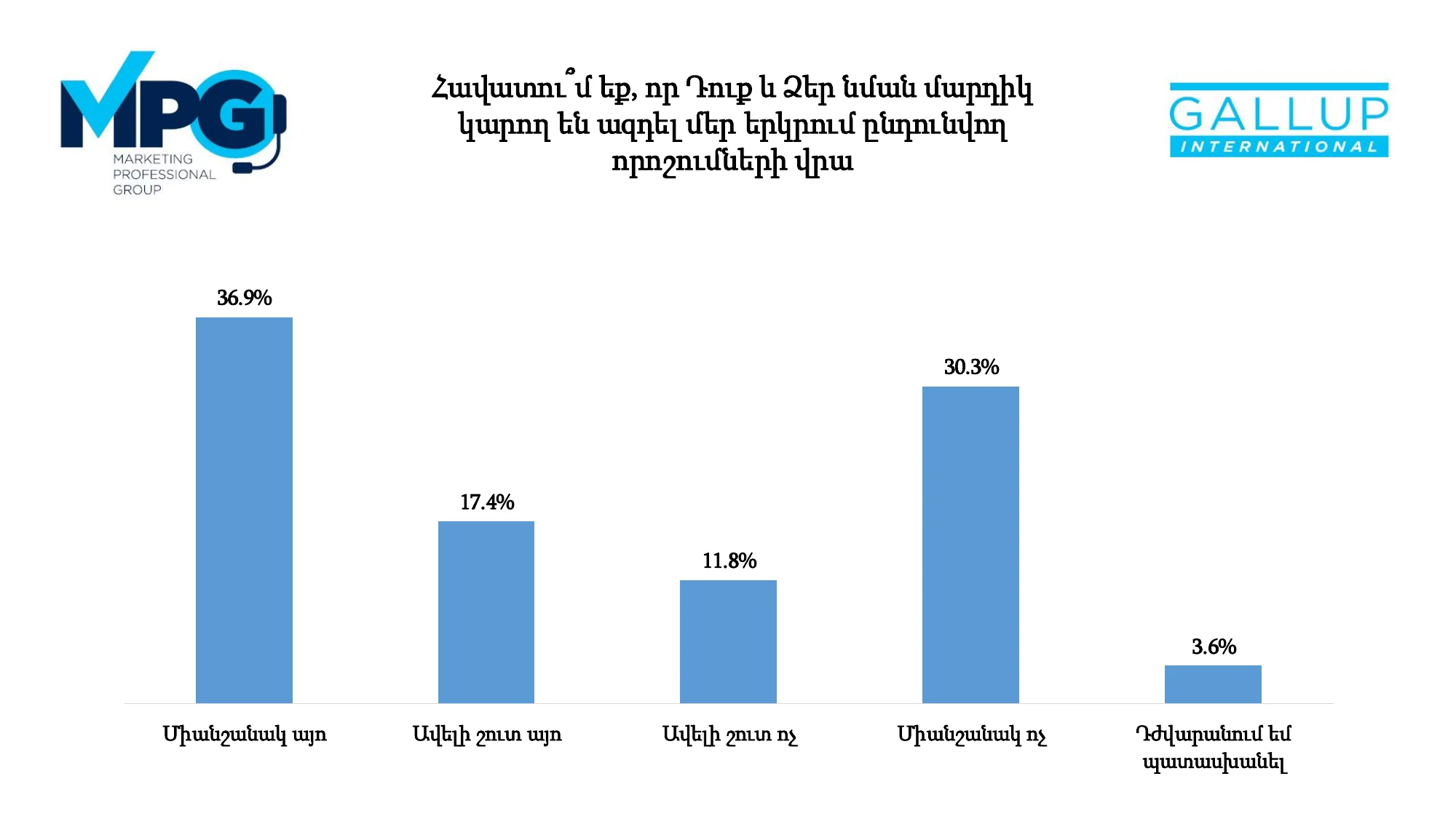
A slim majority believe they can influence political decisions, while a large minority feel powerless. This points to mixed civic confidence.
Slide 7 – Fear of Expressing Opinions
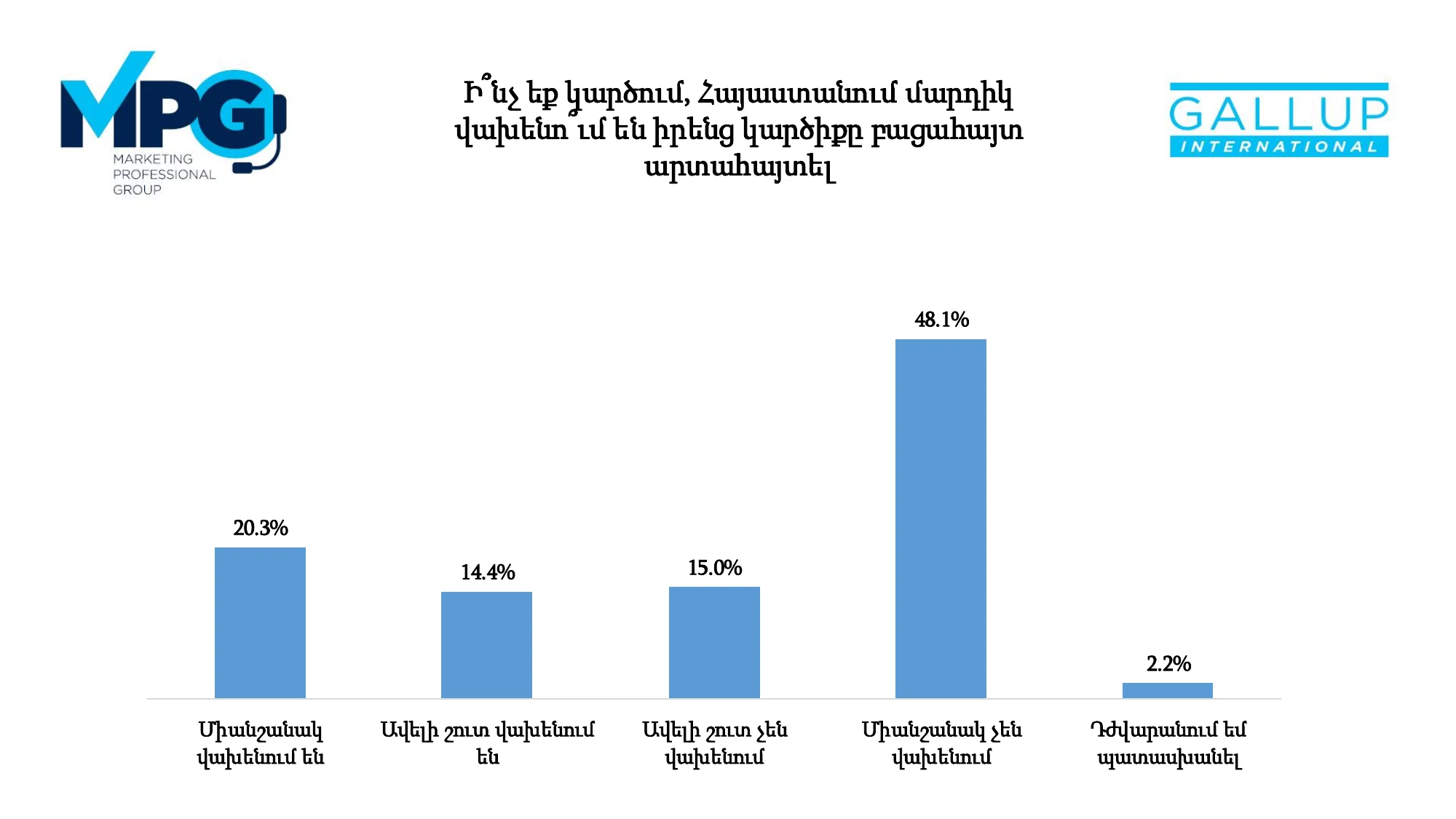
Most respondents report they are not afraid to express their views openly, suggesting a degree of social defiance or optimism despite political pressure.
Discussion points:
- Will this translate into higher turnout in the June 2026 election?
- Could participation alter the political trajectory?
Slides 8–13 – Solidarity and Trust in Institutions
Slide 8 – Overall Political Situation
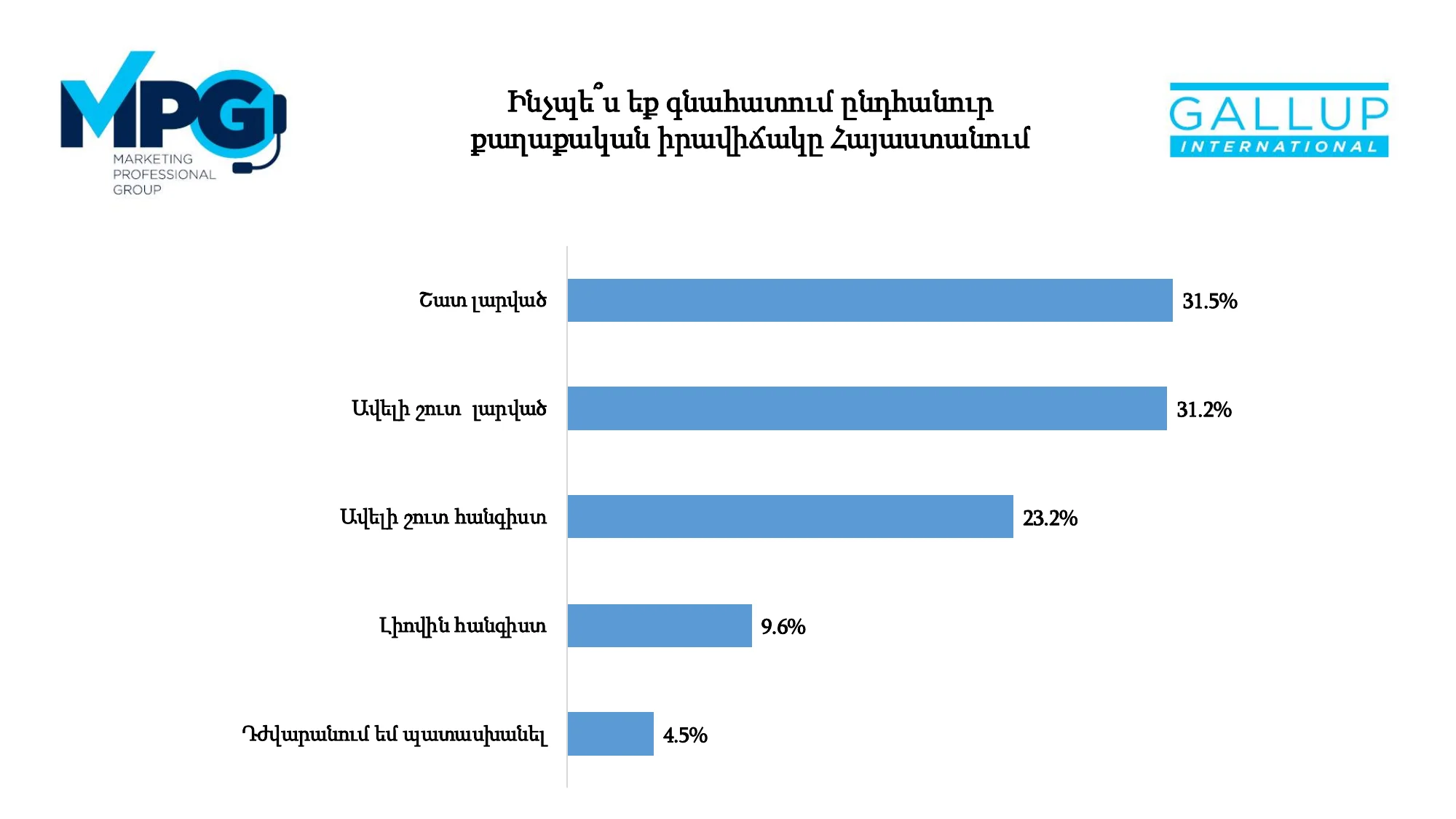
A majority perceive high polarization, while a significant minority still see harmony and calm.
Slide 9 – Need for Social Solidarity
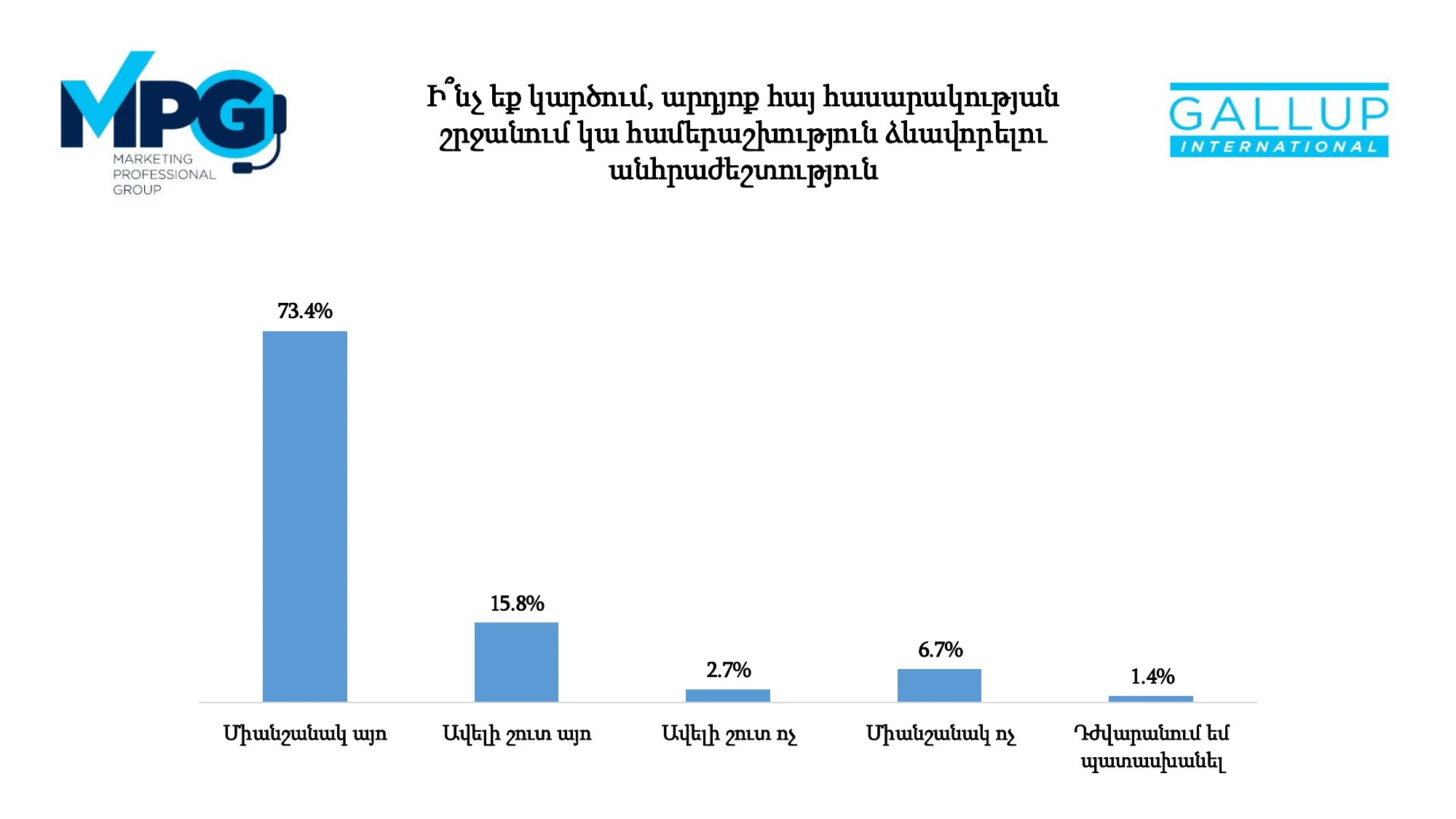
Nearly 90 percent agree that Armenia needs greater social harmony across political divides.
Slide 10 – Obstacles to Solidarity
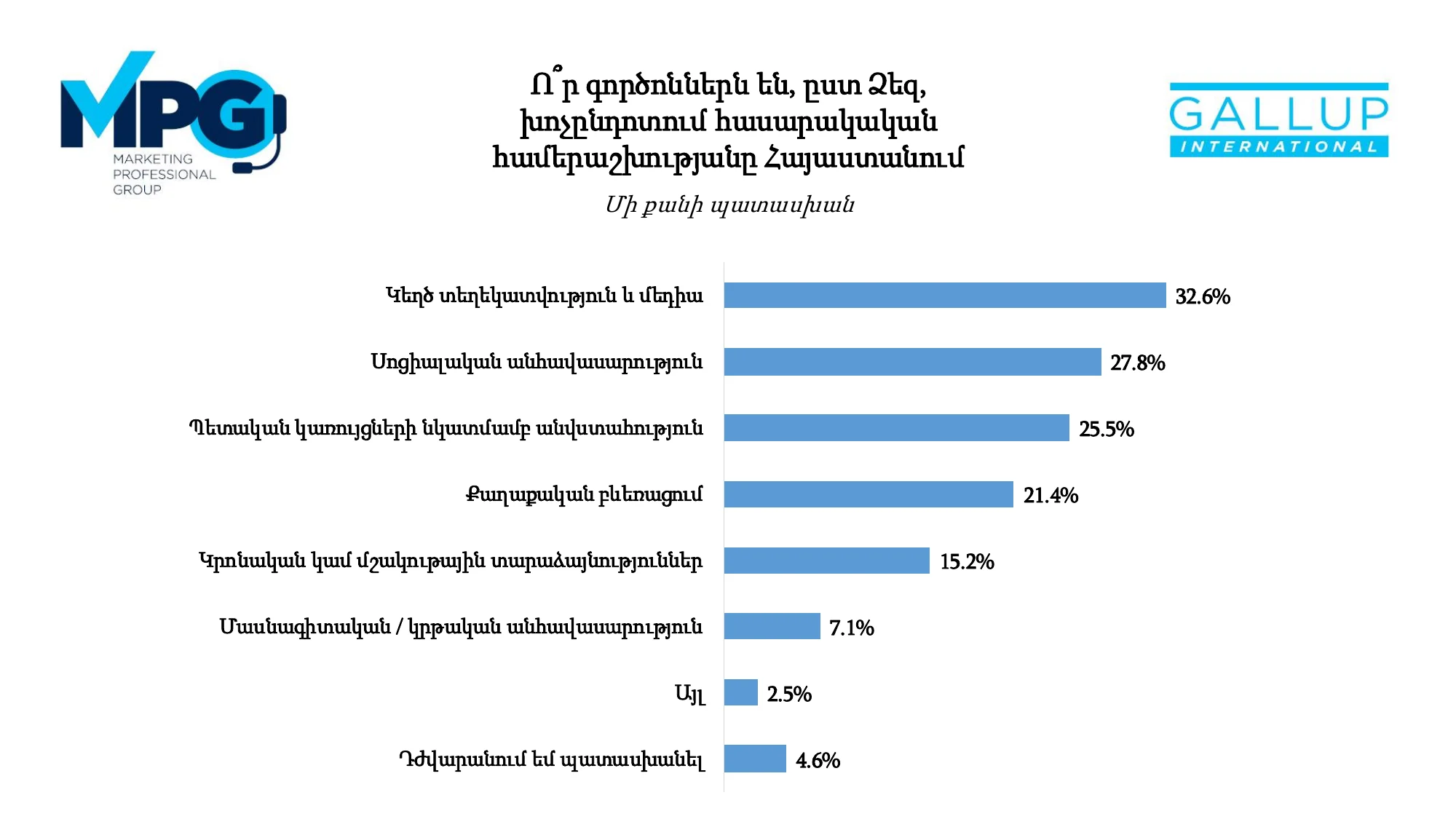
Respondents cite fake news media, lack of social security, political polarization, and low trust in government as the main obstacles. Religious and cultural issues rank much lower.
Slide 11 – Trust in Institutions
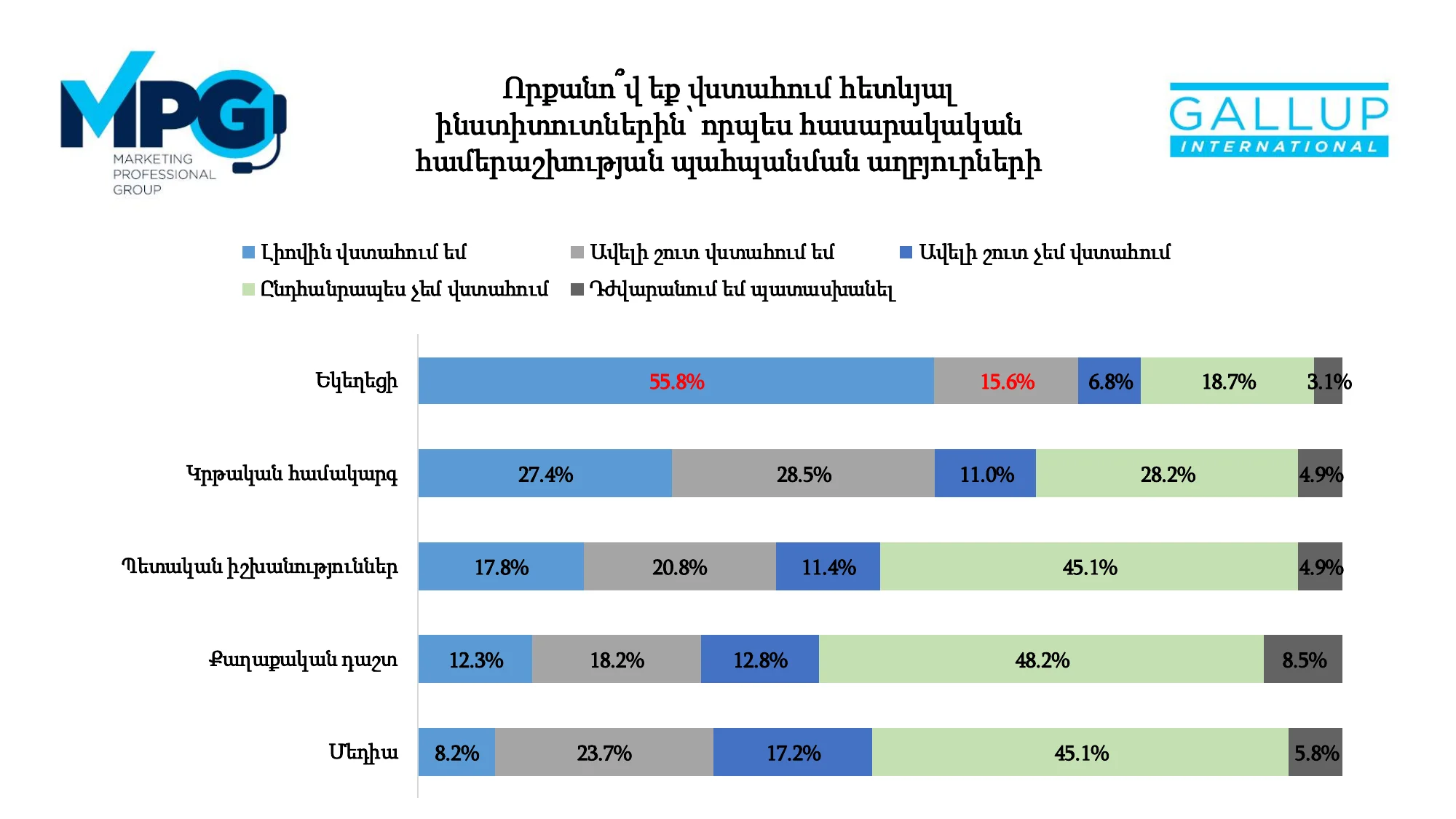
The Armenian Church ranks highest in public trust, while the media ranks lowest. Government institutions perform poorly but are not at the bottom.
Slides 12–13 – Leadership for Healing and Unity
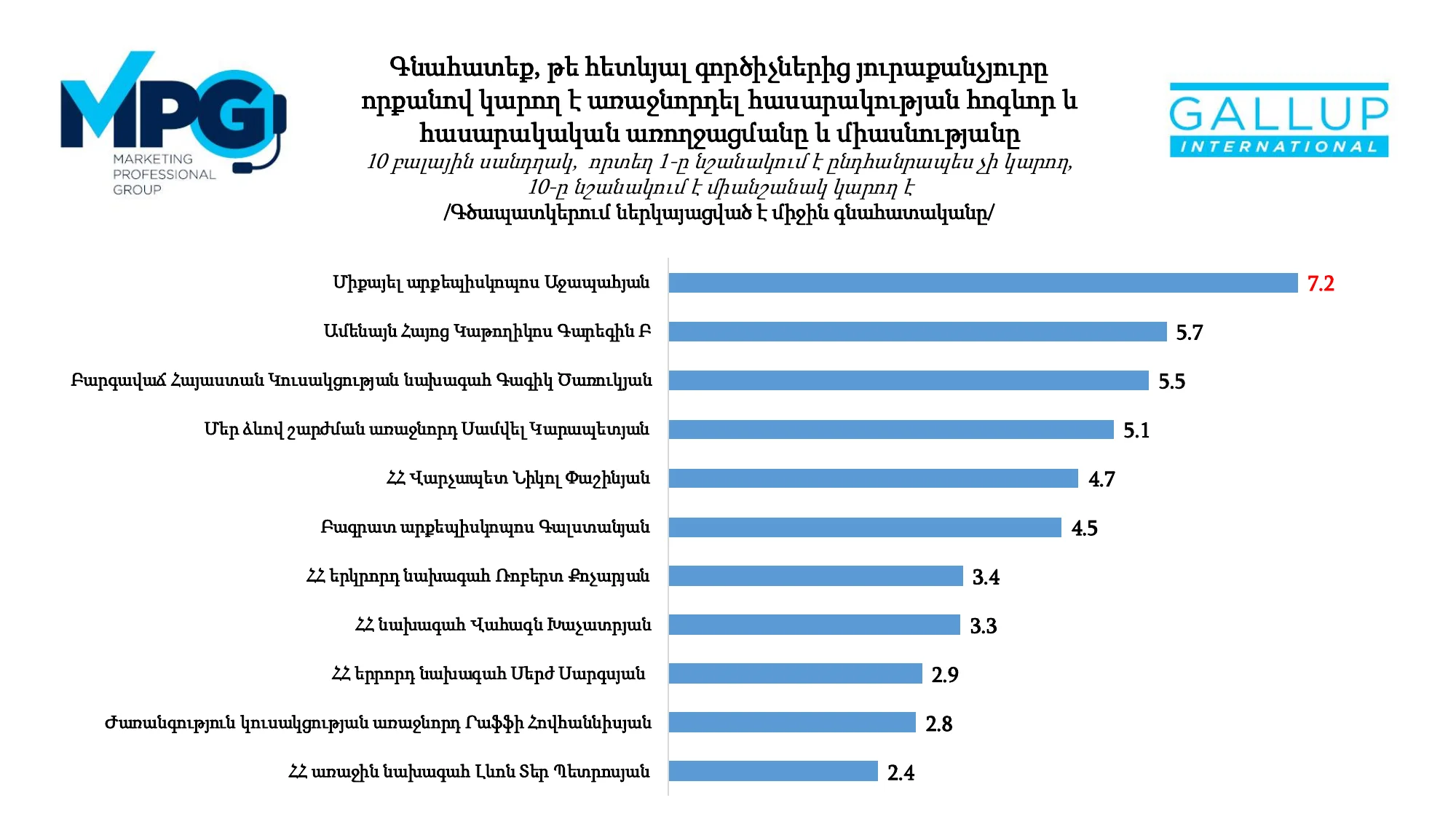
Respondents express limited confidence in political figures to lead social healing, pointing instead toward institutions outside formal politics.
Discussion points:
- What does high trust in the Church amid a state–Church conflict reveal?
- Is the confrontation politically miscalculated?
- What does low trust in media imply when most people consume pro-government outlets?
Armenian Economy in 2025 (January–October)
Against the economic anxiety revealed in the poll, we review findings from the Luys Foundation report. Major underperformance is recorded in capital expenditures, particularly in defense, infrastructure, education, tourism, and digital transformation.
State debt has increased sharply, adding roughly $1.4 billion in nine months and more than doubling since 2018. Despite rising debt, there is little evidence of corresponding capital projects, job creation, or wage growth.
Key questions discussed:
- How does underperformance affect ordinary citizens?
- Should rising national debt be a major concern?
- If debt is rising, where is the money going?
- What does this say about the efficiency of public administration?
Referenced Articles & Sources
Venezuela, US Special Forces Operation, International Reactions
- Secret meetings point to inside job to take down Maduro
- Merz: Maduro led country to ruin (Yahoo)
- Emmanuel Macron statement (X)
- Kyriakos Mitsotakis statement (X)
- China reacts with condemnation, but no threats (Yahoo Finance)
- Russia calls UN meeting on Venezuela operation (The Hill)
- Vučić after Security Council session: “Public international law no longer exists” (KoSSev)
Armenia, Church-State Confrontation
- Փաշինյանը հայտարարում է եկեղեցու «բարենորոգման» մեկնարկի մասին
- Pashinyan unveils major reform ‘roadmap’ for Armenian Apostolic Church: New Canon Law and Catholicos election (ARMENPRESS)
- Armenian PM Tries To Step Up Pressure On Church Head (Azatutyun)
Armenia, Economy and Public Finance
Wrap-up
Don’t forget to support us:
That’s our show! We hope you found it useful. Please find us on Social Media and follow us everywhere you get your Armenian news.
Thanks to Laura Osborn for the music on our podcasts.
Guests
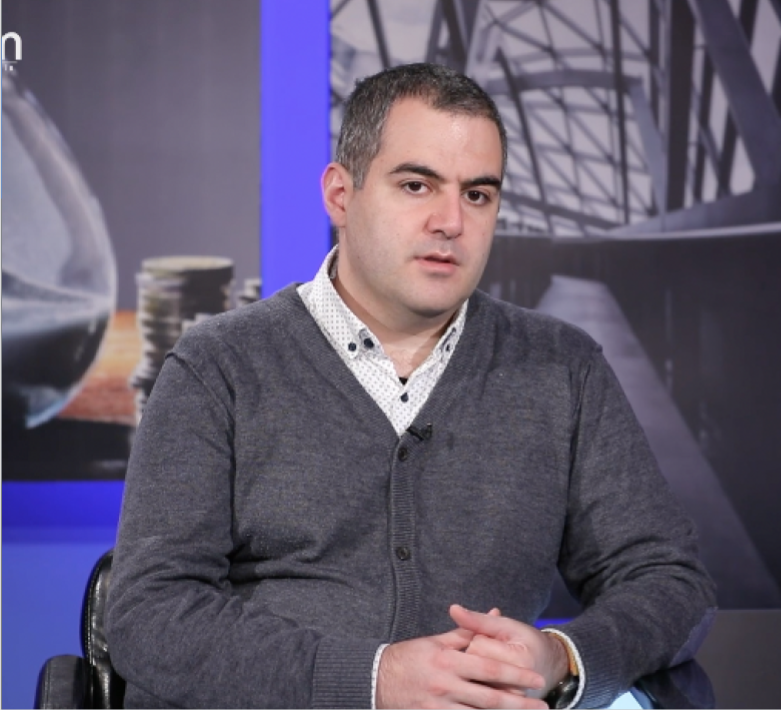
Hrant Mikaelian
Hrant Mikaelian is a political scientist and multidisciplinary researcher in social sciences based in Yerevan.
Hosts

Asbed Bedrossian
Asbed Bedrossian is an IT professional, and for years oversaw the central IT enterprise infrastructure and services at USC. His decades of experience spanned across IT strategy, enterprise architecture, infrastructure, cybersecurity, enterprise applications, data center operations, high performance computing, ITSM, ITPM, and more.
Asbed founded the Armenian News Network Groong circa 1989/1990, and co-founded the ANN/Groong podcast in 2020.

Hovik Manucharyan
Hovik Manucharyan is an information security engineer who moved from Seattle to Armenia in 2022. He co-founded the ANN/Groong podcast in 2020 and has been a contributor to Groong News since the late 1990s.
Disclaimer: The views expressed by Hovik Manucharyan on the ANN/Groong podcast are his own and do not necessarily reflect the opinions of his employer or any other organization.