
On November 9, Armenia, Azerbaijan and Russia signed The Statement ending the war in Artsakh, known more commonly as Nagorno-Karabakh. Russia emerged as a major winner, by ending the violence, introducing peacekeepers, and upholding its historical role as the regional referee in the Caucasus. What are Russiaâs interests in the region, and in this agreement?
Pietro Shakarian helps us explore. He is a historian and a Ph.D. candidate in Russian History at the Ohio State University. His analyses on Russia, Armenia, and the post-Soviet space have appeared in several publications, including The Nation, the Cleveland Plain Dealer, the Russian International Affairs Council, Russia Direct, Hetq, and more.
– Why is the South Caucasus so important to Russia? Are Russiaâs interests the same as they were 200 years ago, as an expanding power in the region? – Why is Karabakh important enough for Moscow to commit its troops? – How does the Kremlin perceive the current leaderships in Yerevan and Baku? – How many towers to the Kremlin? What are the different factions within the Russian ruling elite? How do perceptions of the region and solutions for it differ among them? – How is Turkey viewed within the context of Russian regional strategy? – Finally, letâs talk about the November statement and beyond! What does Russian intervention mean? Where does Moscow go from here? – Is Moscow, as Pushkin would say, a âprisoner of the Caucasus?â
Guest(s):
Hosts: – Asbed Bedrossian – Hovik Manucharyan
Show Notes
Show Notes
Guests
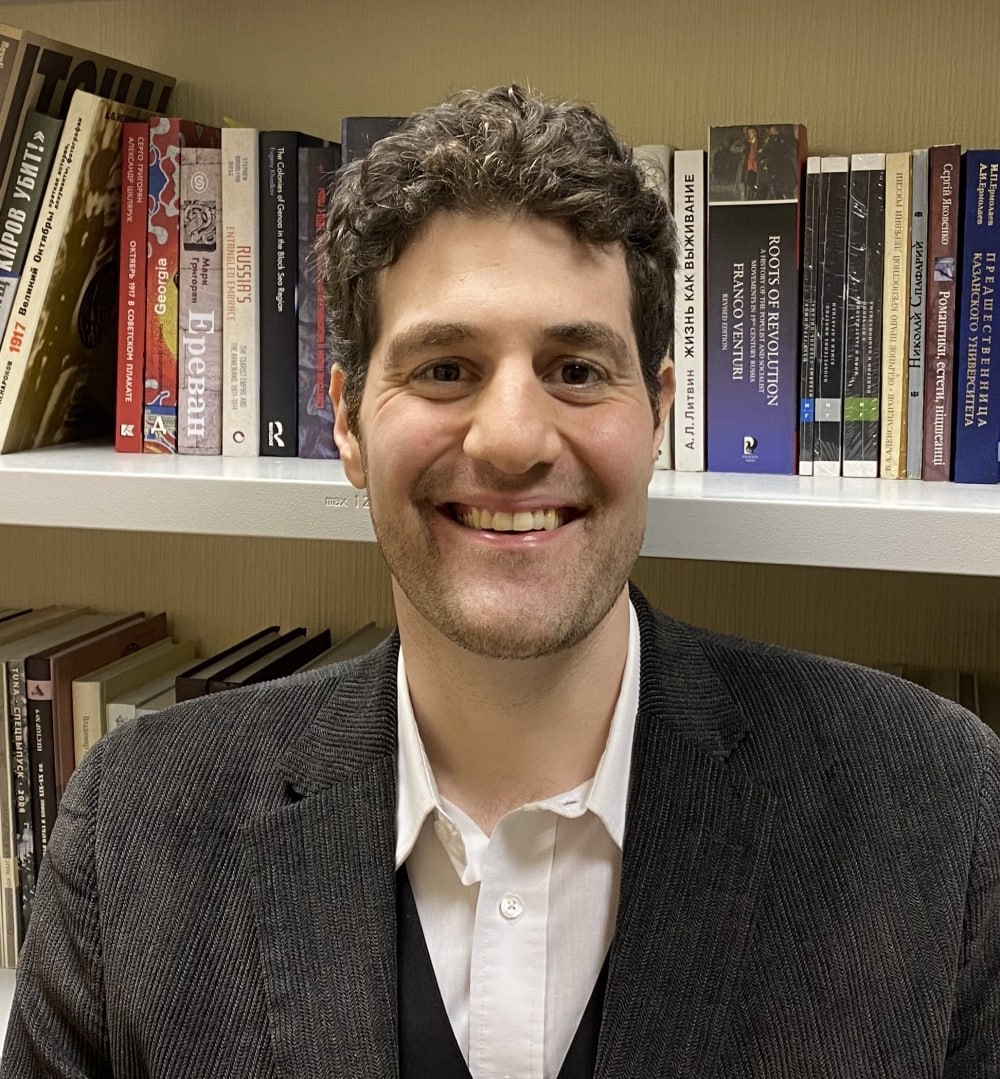
Pietro Shakarian
Dr. Pietro Shakarian is a historian of Russia and the Soviet Union. He is the author of the book Anastas Mikoyan: An Armenian Reformer in Khrushchev’s Kremlin. Dr. Shakarian’s analyses on Russian and post-Soviet affairs have appeared in The Nation, The Plain Dealer, and various other publications. He was previously a lecturer in history at the American University of Armenia in Yerevan.